Skip to content
Live
Nov 8Sun
  1. TechCrunch · AI65

    After the midterm elections, OpenAI adjusted its data center policies in response to political pressure.

    In the 2026 midterm elections, the Democratic Party achieved a major victory, with voters in multiple areas rejecting proposals for data center construction and electing politicians who have pledged to limit data centers. OpenAI released a policy blueprint for computing campuses, no longer requiring confidentiality and sharing plans to respond to political pressure. Technology companies, especially those with ultra-large-scale data centers, may face more challenges in the next two years.

Nov 7Sat
  1. ITHome · AI65

    Bill Gates on 'billionaire tax': Perhaps the most suitable tax reform in the AI era is to tax the rich

    Bill Gates believes that levying a tax on the rich similar to California's 'billionaire tax' is the most appropriate way in the AI era, because the founders of AI and related industries have seen a significant increase in wealth, and families holding shares in these companies can also expect substantial investment returns, exacerbating the wealth gap. Gates points out that one cannot rely on the rich to solve the wealth gap problem through charitable donations, and the government should implement progressive taxation based on wealth levels, as charitable donations are voluntary actions.

  2. IBM Research Blog38

    IBM deploys quantum computing system in Chicago, supporting the National Quantum Algorithms Center

    IBM has deployed the IBM Quantum System Two system, equipped with the IBM Quantum Nighthawk r2 processor, at the University of Chicago's Hyde Park Laboratory, supporting the National Quantum Algorithms Center (NQAC) and the broader Illinois quantum ecosystem. The system will initially run at the University of Chicago and will eventually move to the Illinois Quantum and Microelectronics Park (IQMP), a park built with a $500 million investment by the Illinois government, which will become the long-term home for NQAC and new quantum computers.

  3. The Verge · AI38

    Latest updates on AI data centers

    AI data center construction has drawn global attention due to issues such as energy consumption, environmental impact, and community opposition. OpenAI and Amazon have committed to cooperating with local communities and covering energy costs, but the U.S. Congress may pass restrictions. AMD CEO Lisa Su stated that the company prioritizes data centers, and OpenAI is gradually renaming data centers to 'compute campuses'.

  4. TechCrunch · AI35

    Democratic midterm election victory may reshape the landscape of the AI industry.

    The Democratic Party achieved a historic victory in the US midterm elections, which may have a profound impact on the tech industry. The public majority supported stricter development restrictions on 41 data center-related referendums, and the newly elected Democratic governors and legislators may push for more regulation. The TechCrunch Equity podcast discussed the impact of the election on data centers (OpenAI is trying to rebrand) and increased government regulation for tech giants.

Nov 6Fri
  1. ITHome · AI65

    The State Administration of Radio, Film and Television has initiated a new round of special governance for AI micro-dramas.

    The State Administration of Radio, Film and Television has launched a two-month special campaign to address the issue of uneven quality and the rebound of vulgar content in AI micro-dramas, focusing on problems in content creation and dissemination. The campaign targets vulgar content such as harmful content for children and soft-pornography, as well as vulgar elements in titles and promotional materials, and homogenization issues on the homepage, first screen, and first recommendation.

  2. ITHome · AI

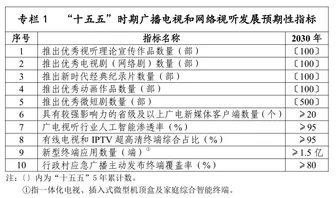
    The State Administration of Radio and Television has proposed that the AI penetration rate in the radio and television industry will reach 95% or higher by 2030

    The National Radio and Television Administration proposes that by 2030, the artificial intelligence penetration rate in the radio and television industry will reach 95% or higher, and the number of new terminal applications will exceed 150 million, not meaning that 95% or more of what viewers see is AI content. The plan requires advancing the aggregation of audio-visual corpus, strengthening the layout of intelligent computing infrastructure, creating industry-specific large models and intelligent agents, and deepening the innovative application of AI in content, networks, services, security, and regulation.

  3. ITHome · AI65

    India plans to complete its self-developed GPU within two years, promoting the commercialization of SHAKTI and VEGA processors

    India plans to develop its own GPU chip within about 24 months, while promoting the commercialization of RISC-V architecture-based SHAKTI and VEGA processors. Both SHAKTI and VEGA processors use the open RISC-V instruction set architecture, where the VEGA ET301 is a 32-bit chip with a maximum operating frequency of 100MHz, primarily targeting simple applications such as sensors, wearable devices, and the Internet of Things

  4. ITHome · AI

    The State Administration of Radio, Film and Television reiterates support for live-action micro-short dramas and regulates AI micro-short dramas

    The State Administration of Radio, Film and Television reiterates its support for real-person micro-short dramas and regulates AI micro-short dramas. AI technology opens up new space for micro-short dramas to reduce costs, increase efficiency, and innovate expression, but it must adhere to copyright and ethical bottom lines. Over 90% of micro-short dramas are AI-generated, while real-person dramas remain the main force in high-quality creation. The administration requires platforms to fulfill their responsibilities and implement 'review before broadcasting, full human review'.

  5. The Verge · AI65

    OpenAI no longer signs non-disclosure agreements with public officials in data center projects

    OpenAI announced that it will no longer use non-disclosure agreements with public officials in its data center community commitment, allowing only for the protection of legitimate security information, trade secrets, or proprietary or competitive sensitive information. This move comes in the context of strong voter opposition to data center expansion in the recent midterm elections.

  6. 36Kr · AI35

    South Korea is wary of AI regulation tightening after the US midterm elections leading to risks spilling over to the stock market.

    South Korean Finance Minister Lee Hyoungrok said he would focus on the global financial market after the US midterm elections to prevent excessive reactions to AI regulation risks. Outsiders worry that the election results may lead to stricter regulation, triggering risks spilling over to global stock markets. South Korea will maintain stability in the Korea-US Trade Agreement and strengthen communication with the US.

  7. 404 Media

    Meta halts update to commercial terms after widespread opposition to AI training conditions

    Meta announces suspension of the commercial terms update scheduled to take effect on November 20, which requires business accounts to allow Meta to use their website content as AI training data, drawing strong opposition from journalists and users. The terms, previously postponed from October 30 to November 20, have been temporarily banned by a Norwegian court, and UK regulators have launched an investigation. Meta says it will consult stakeholders and provide further updates at a later date, with existing terms continuing to be effective temporarily.

    Same story · 2 outlets

    How the accounts differ:The Verge states the delay is due to global publisher opposition; 404 Media mentions artist and small business dissatisfaction and the ability for EU and UK users to object.

  8. The Verge · AI80

    AI industry in the US faces regulatory and data center construction resistance after the midterm elections

    After the Democratic Party won both the Senate and House in the US midterm elections, the AI industry is facing the prospect of tighter regulation and slower data center construction, with 43 out of 44 local data center bans passed in the vote. Elected officials have promised to summon CEOs of AI companies to testify, and experts believe that Trump and the Republican Party in Congress have basically ended their efforts to ban state-level AI restrictions.

    Why it matters: The midterm election results and the vote on local data center bans provide specific signals for observing the direction of US AI regulation.

Nov 5Thu
  1. ITHome · AI

    OpenAI releases 'National Community Contract' and 'Computational Power Park Policy Blueprint', committing to bear data center costs and disclosing plans

    OpenAI releases 'National Community Contract' and 'Computational Power Park Policy Blueprint', committing that future computational power parks will sign local community contracts, involving residents in early planning and disclosing progress reports. OpenAI will fully bear the power costs and grid expansion costs for data centers, and disclose the environmental impact assessment report. According to OpenAI's Chief Global Affairs Officer Chris Lehane, the Ohio project is expected to create 2,500 long-term jobs with an average annual salary of $80,000.

  2. ITHome · AI74

    Google's requirement for schools to enable Gemini to use search has drawn criticism from US political figures.

    Google announces that schools using its K-12 educational software must enable AI tools like Gemini, otherwise students will not be able to use Google Search and will see a message indicating that school-provided features are unavailable. Vermont Senator Bernie Sanders accuses Google of extortion, while Connecticut Senator Richard Blumenthal, former FTC Chair Lena Khan, and New York City Mayor Eric Adams also criticize the move for potential monopoly and anti-competitive practices.

  3. ITHome · AI

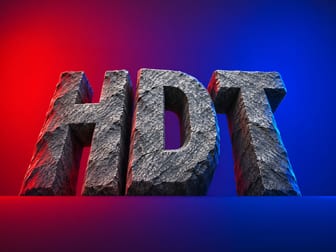
    Bluetooth SIG adopts 'High Data Throughput' standard: Low-power transmission peak speed increases by 275% to 7.5 Mbps, paving the way for lossless wireless audio

    The Bluetooth SIG has adopted 'High Data Throughput' (HDT) technology as an optional feature for Bluetooth Core Specification 7.0, increasing the peak bit rate of low-power transmission from 2 Mbps to 7.5 Mbps, a speed increase of 275%. HDT enhances spectral efficiency, energy efficiency, and reliability through a new physical layer, with the first flagship scenario being high-end lossless wireless audio, with the first supporting devices expected to be released in early 2027.

  4. TechCrunch · AI65

    OpenAI executive Chris Lehane believes AI could be a turning point for the 2028 US presidential election, urging policymakers to create policies that address the concerns of the American people about AI

    OpenAI's Chief Global Affairs Officer Chris Lehane believes the 2028 presidential election could be a turning point for AI, urging policymakers to create policies that address the concerns of the American people about AI, rather than merely opposing AI and data centers. He proposed five policy priorities, covering worker protection and education, AI safety, and data center development. This stance marks a significant shift in OpenAI's policy agenda, moving away from last year's focus on accelerating AI development, reducing regulatory barriers, and expanding infrastructure.

  5. Ars Technica · AI80

    Several measures restricting AI and data centers were passed in the U.S. midterm elections, with the tech industry calling it anti-Trump rather than anti-technology.

    In the U.S. midterm elections, 38 out of 44 measures restricting data centers in 10 states were passed, including multiple moratoriums and bans; Democrat Gina Hinojosa won the Texas gubernatorial election, planning to delay projects until legislation involving water, electricity, air, and property rights is passed.

    Why it matters: The election results and industry statements create a contrast, allowing readers to judge the policy resistance faced by U.S. AI infrastructure expansion.

  6. TechCrunch · AI65

    Irene Solaiman, VP of Strategy at Hugging Face, discusses the costs, risks, and trade-offs of open source AI

    Open source AI models are becoming increasingly popular due to advantages in cost, control, and flexibility, but how can businesses profit from them is a key issue. Irene Solaiman points out that choosing the right tools and infrastructure is crucial for startups, while also addressing the security challenges in the development of open source AI. US companies need to leverage capital-rich companies like Nvidia to build competitive open source models to counter the rise of Chinese AI models.

  7. TechCrunch · AI86

    Google plans to shut down Search for schools that restrict AI, prompting criticism from various parties.

    Google announced that schools using its K-12 software will not be able to use Search if they do not choose to enable AI tools like Gemini, and students will only see a message indicating that the school-provided service is unavailable.

    Why it matters: Google's policy of bundling Search with AI tools has drawn criticism from politicians and antitrust officials, highlighting the controversy surrounding AI in schools.

Nov 4Wed
  1. The Decoder71

    Google mandates that schools must accept AI starting in 2027 to use the search service

    Starting from the beginning of 2027, Google requires schools to accept AI features in student accounts, or they will lose Google Search access. Gemini, Gemini Notebook, and Google Search are turned off by default, and schools can enable them one by one, but no longer provide a search version without AI.