Skip to content
Live
Found 22 items · updated 01:10
Oct 25Sun
  1. ITHome · AI75

    The open-source project GPU Unlock can release the hidden AI computing power of RTX 30 series graphics cards, with testing showing an increase of up to 60%

    The open-source project GPU Unlock, developed by GitHub user Zagitta, can remove the instruction emission rate limit of Ampere architecture consumer-grade GPUs in FP16/BF16 tensor core operations without modifying the driver or flashing VBIOS.

    Why it matters: The original text provides measured improvement data for multiple RTX 30 GPUs under GEMM and image generation workloads, also indicating limitations such as memory bandwidth.


Oct 8Thu
Jul 1Mon
  1. Prime Intellect Blog

    Prime Intellect Compute platform officially launched: Global GPU resource aggregation and scheduling market

    Prime Intellect Compute platform officially launched, aggregating global GPU resources to democratize instant computing. The platform offers a unified resource pool, supporting instant access from single GPU to 512+ GPU clusters. The first batch integrates 12 cloud service providers, with H100 GPUs priced at $1.5-4 per hour.

Nov 5Thu
  1. IBM Research Blog36

    ORNL, IBM, and AMD jointly announce the quantum error correction collaborative design platform

    ORNL, IBM, and AMD deploy a quantum error correction (QEC) collaborative design platform at IBM's New York Poughkeepsie campus, integrating the IBM Quantum Nighthawk r2 processor with the ORNL Umbra HPC system, which includes the AMD Instinct MI355X GPU and 5th Gen AMD EPYC™ CPU, providing low-latency quantum-classical execution capabilities for algorithm development and validation in hybrid HPC-quantum computing environments.

Oct 24Sat
  1. Cohere Blog58

    Cohere Model Vault launches confidential computing features

    Cohere Model Vault launches confidential computing feature in public test, bringing hardware-level protection and verifiable security for hosted enterprise AI. The feature runs inference on both CPU and GPU, protecting workload memory through hardware-enforced isolation and using NVIDIA confidential computing technology to encrypt GPU memory and traffic between CPU and GPU. Customers can verify the processing environment, including hardware, firmware, and software configuration, before sending sensitive data, ensuring data is protected during the reasoning process.

Oct 21Wed
Feb 10Tue
  1. Prime Intellect Blog

    Prime Intellect Lab: An end-to-end platform for training custom models

    Prime Intellect Lab releases an end-to-end model training platform that integrates Environments Hub, hosting training and hosting evaluation, supporting large-scale agent reinforcement learning, reasoning, and evaluation without managing GPU clusters or algorithm details. The platform is built based on environments, including task datasets and executors, and has completed over 3000 reinforcement learning runs through private testing.

Aug 7Thu
  1. Cohere Blog

    Cohere introduces North: The next-generation enterprise AI platform

    Cohere launches the enterprise AI platform North, which enhances employee task efficiency and quality by securely accessing work data, combining generative search models, customizable agents, and built-in workflow automation. The platform supports private deployment and can run with as few as two GPUs, has been adopted by companies like RBC and Dell, covering key industries such as finance and healthcare, and features security characteristics like fine-grained permission control, autonomous policies, and compliance certifications.

Nov 12Thu
Oct 31Sat
Oct 30Fri
  1. Baseten Blog22

    Baseten and Postman: Building Enterprise-Grade Reliable and Cost-Effective Agents

    Postman's Agent Stack includes four products: Passport, Fabric, Astropods, and Fern, used for preparing APIs, controlling access, and governing agent behavior. Baseten, as Postman's recommended enterprise team reasoning partner, provides fast, reliable, and cost-effective reasoning infrastructure, supporting multiple models such as Beam 1.0 and DeepSeek V4.1 Flash, ranking top in throughput and latency.

Oct 29Thu
Oct 23Fri
Oct 21Wed
  1. NVIDIA Blog

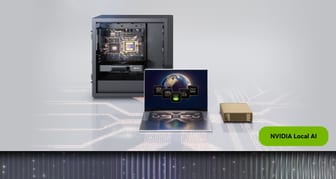
    NVIDIA showcased its full lineup of local AI hardware: RTX Spark, DGX Spark, and DGX Station, helping to power next-generation intelligent agents.

    NVIDIA showcased its full lineup of local AI hardware at GTC Berlin, with RTX Spark now available to support personal agents on Windows PCs, DGX Spark enabling developers to build and scale Linux applications, and DGX Station designed for Linux enterprise teams to run cutting-edge workloads, with the Windows version launching in December.

Oct 20Tue
  1. Hugging Face Blog62

    PyTorch 2.15 brings FP8 and faster LLM decoding to the MPS backend.

    The Hugging Face PyTorch team introduces updates to the MPS backend in PyTorch 2.15, adding the tensor torch.float8_e4m3fn and F.scaled_mm, with FP8 tensors occupying half the space of BF16.

    Why it matters: The original text provides specific numbers for the MPS backend in FP8, MoE decoding, and memory usage, which can be used to judge the actual changes in running models locally on Mac.

Oct 19Mon
Oct 13Tue
Oct 8Thu
  1. NVIDIA Blog

    NVIDIA and Microsoft team up to usher in a new era of AI agents for Windows PCs: RTX Spark and local AI calculator

    NVIDIA and Microsoft collaborate to launch RTX Spark laptops and Windows AI agent infrastructure, supporting local running of 125B parameter Qwen 3.8 Flash Next models; Microsoft releases MXC operating system-level container to ensure agent secure operation, pre-orders for RTX Spark open today, paired with Grace Blackwell chip, offering up to 20 PFLOPS inference performance.

Oct 6Tue
May 7Thu
  1. Prime Intellect Blog

    Releasing Lab: The training platform for self-improving intelligent agents is officially launched

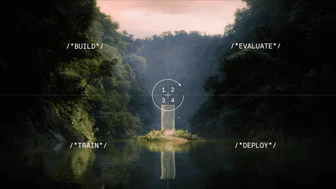
    Releasing Lab is officially launching today as part of the Open Superintelligence Stack. This platform supports the full process of training self-improving agents, allowing users to specify tasks, define execution environments, evaluate models, train based on reward signals, check reasoning results, deploy adapters, and run reasoning.

Aug 18Mon