Skip to content
Live
  1. Hugging Face Blog65

    llama.cpp and ggml release v1.0.0, establishing semantic versioning rules.

    llama.cpp and ggml release v1.0.0, binding destructive changes to the public C API to the major version number, and both will be released according to semantic versioning rules thereafter. The project has supported over 150 model architectures and mainstream speculative decoding methods, and provides pre-release binaries for Linux, macOS, Windows, Android, iOS, as well as distribution channels such as Docker, Homebrew, and conda-forge.

    Why it matters: llama.cpp and ggml are released simultaneously with v1.0.0, and the major version number corresponds to destructive changes to the C API, allowing downstream dependents to plan their upgrade schedule accordingly.


  2. Hacker News · AI hot posts86

    Edge0 open sources 145B and 120B edge-side models and inference frameworks.

    Edge0 open-sourced the Edge0-145B and Edge0-120B two edge models, and also released a unified inference framework and deployment tools. Officially, the 145B model can run locally on compatible laptops, with peak memory of 29GB, decoding speed of 80+ tokens/s, pre-filling speed of 1100+ tokens/s, supporting context lengths of 128K–256K.

    Why it matters: The original text provides actual memory, speed, and multiple benchmark comparisons of the edge 145B model, which can be used to judge the practical boundaries of running cutting-edge models locally.

  1. Hugging Face Blog71

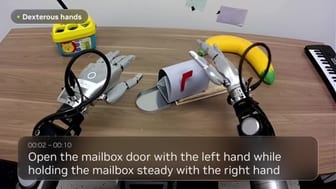
    NVIDIA has released four open-source world model checkpoints for Cosmos 3.

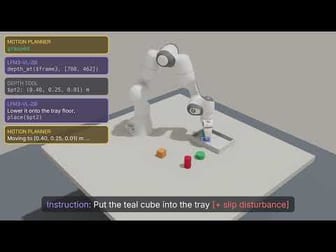
    NVIDIA has added four new open-source weight checkpoints for Cosmos 3 under the Cosmos World Model platform, all of which are post-trained versions of Cosmos 3 Nano, containing 16B trainable parameters, using the OpenMDW1.1 license, allowing commercial and non-commercial use.

    Why it matters: The original text provides four open-source weight checkpoints and a four-stage training recipe, allowing readers to judge how to adapt the world model to their own sensors and robot bodies.

  1. Hugging Face Blog72

    Phonon TTS releases on-device speech models, topping multiple metrics on the Hugging Face open TTS leaderboard

    Phonon releases a small TTS model that can run on local devices, without a server and network, offering two versions of about 65 MB and 75 MB, covering English, French, German, Spanish, and Portuguese.

    Why it matters: The original text outlines the specifications, open-source license, and leaderboard performance of on-device TTS models, allowing judgment on the usability boundary of small models in local voice scenarios.

  2. Hugging Face Blog65

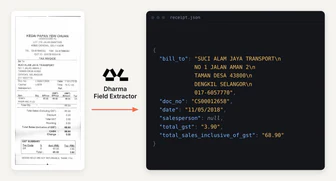
    Dharma-AI releases Dharma Field Extractor: 2B parameter model extracts any document into JSON fields

    Dharma-AI releases Dharma Field Extractor, a 2B parameter model, input document image and optional schema, output typed structured JSON, supports open extraction and schema-directed extraction, missing fields return null.

    Why it matters: The original text provides a comparison of quality and cost on self-built benchmarks, allowing readers to judge the feasibility of the small model specialized route in field extraction tasks.

  1. Hugging Face Blog60

    IBM trains 20B small model Palette to generate slides according to its own design language

    IBM's research team fine-tunes a 20B open-source weight model, Palette, using a two-role LoRA scheme where designers write JSON briefs and encoders generate pptxgenjs code page by page to create presentations according to IBM Design Language.

    Why it matters: IBM uses synthetic data and checks to repair closed-loop training for a 20B small model to create presentations, providing a method that can be transferred to other structured outputs.

  2. Hugging Face Blog62

    The same model with a different harness: Comparing CUGA, Hermes, and Deep Agents on AppWorld.

    The IBM team compared CUGA, Hermes, and Deep Agents using the same open-source weight model GLM-5.3-flash on 90 tasks in AppWorld, with pass rates of 81.1%, 46.7%, and 30.0%, respectively, and 20, 8, and 2 scenarios where all three variants passed.

    Why it matters: With the same model but a different harness, the task completion rate increased from 30% to 81%, and reproducible configurations and evaluation links were provided in the text.

  1. Hugging Face Blog85

    Mistral Large 4 (Le Chonk) released on Hugging Face

    Mistral releases multimodal MoE model Mistral Large 4 (Le Chonk), with approximately 1T total parameters, 49B activation parameters, a context window of 1M tokens, offering two official versions FP8 and NVFP4, as well as GGUF made by Unsloth and llama.cpp teams.

    Why it matters: The original text provides specific scores for the 1T total parameter, 49B activation multimodal MoE model on cybersecurity and coding benchmarks, along with measured throughput for local and endpoint deployment.

  1. ITHome · AI78

    NVIDIA open-sourced the speech transcription model Nemotron 3.5 Transcribe, supporting 40 languages and 8 speaker separation.

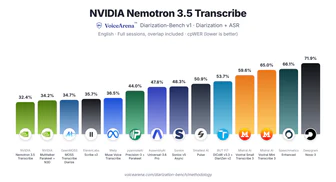
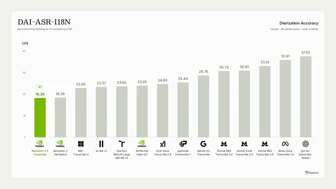
    NVIDIA launched the open-weight speech transcription model Nemotron 3.5 Transcribe on October 28, integrating transcription, speaker attribution, translation, and audio Q&A, using the MoE architecture, with total parameters of about 34 billion and activation parameters of about 4.3 billion, capable of processing the longest recording of 1 hour, supporting transcription of 40 languages, and distinguishing up to 8 speakers.

    Why it matters: NVIDIA open-sourced the speech transcription model, disclosing parameter scale, multilingual and speaker separation capabilities, and benchmark results, allowing comparison with existing open-source ASR solutions.

  2. Hugging Face Blog78

    NVIDIA has released Nemotron 3.5 Transcribe and the Granary v2 data pipeline.

    NVIDIA has released the open-source weight model Nemotron 3.5 Transcribe, integrating transcription, speaker separation, translation, and audio Q&A into a single checkpoint, supporting transcription in 40 languages, translation between 31 languages and English, and speaker annotation in 13 languages, capable of processing the longest 1-hour recordings and annotating up to 8 speakers.

    Why it matters: The original text provides a unified weighting model for multilingual transcription, speaker separation, and translation, along with an open data pipeline and fine-tuning recipes, which can be used to determine the adaptation path for voice scenarios.

  3. Hugging Face Blog76

    Liquid AI releases LFM3 series: Same 2B backbone derived text, visual, audio, multimodal and decision models

    Liquid AI releases the new generation Liquid Foundation Models, LFM3, deriving six 2B-level models from the shared backbone LFM3-1.7B-Base, covering text, vision, audio, multimodal, and decision, all open weights on Hugging Face.

    Why it matters: Liquid AI derives six modality models from the same 2B-level backbone and provides single-card fine-tuning and edge deployment paths, which can be used to judge the specialization route for small models.

  1. The Decoder78

    Nvidia's open-source robot video annotation engine Flora claims to be 125 times cheaper than GPT-6 Astra.

    Nvidia's open-source data engine Flora, used for robot video annotation, claims to label one hour of video for about 0.72 USD, while GPT-6 Astra is about 88.50 USD. Flora consists of three fine-tuned Qwen3.5 models, each responsible for action segmentation, context-aware description, and reward scoring, covering three types of labels: action description, step-by-step scoring, and task success or failure judgment.

    Why it matters: The original text provides Flora's three types of annotation capabilities, cost estimates, and item-by-item comparison with GPT-6 Astra, allowing readers to judge the boundary of open-source alternatives for robot video annotation.

  1. Tencent Hunyuan · Hugging Face new models71

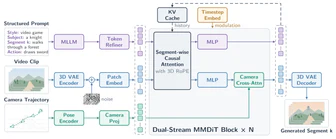
    Tencent Mixuan open-sources Hy-Nomas Interactive World Generation Model Diffusers version

    Tencent's Huyuan has released Hy-Nomas' BF16 Diffusers format distilled weights on Hugging Face. This video world generation model supports multi-round free interaction through text instructions and camera control, generating the same world segment by segment.

    Why it matters: Officially releases distilled BF16 Diffusers weights and supporting benchmarks, allowing readers to judge the practical usage and threshold of multi-round interactive world generation.

  1. Hugging Face Blog66

    Microsoft and Hugging Face use ThinkingBox database validation for RL reward training agents

    Microsoft and Hugging Face release ThinkingBox-Training, directly using ThinkingBox's deterministic verification of database final states as reinforcement learning rewards, training Qwen3.8-27B for 50 steps with GRPO

    Why it matters: Microsoft and Hugging Face directly use database final state verification as reinforcement learning rewards and have publicly released task filtering and training code, which can be transferred to other stateful intelligent agent training

  1. The Decoder74

    Recursive releases its first model developed in collaboration with Eureka Machine

    AI startup Recursive has released its first language model, Flint. During the development process, the AI system named Eureka Machine participated in proposing ideas, building, testing, and planning subsequent experiments.

    Why it matters: Recursive publicly announces its first model developed with the assistance of an automated research system, allowing readers to observe how far AI-assisted R&D can go.