CUDA 20周年:NVIDIA如何通过CUDA平台改变科学计算
CUDA at 20: How the Platform Transformed Scientific Computing
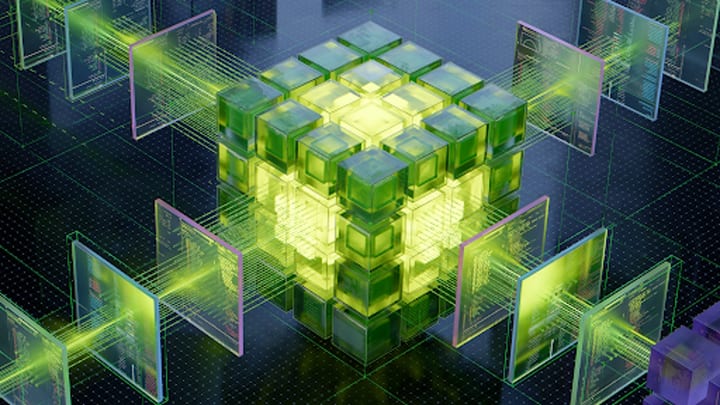
NVIDIA 在 SC26 大会纪念 CUDA 平台发布 20 周年,该平台自 2006 年推出以来已成为现代科学和 AI 的基础。开发者社区通过 CUDA 工具和持续创新,将 GPU 计算从图形应用扩展到科学模拟等领域,推动诺贝尔奖级 AI 研究、超级计算机科学应用和奥斯卡获奖电影特效等突破。
This week at SC26, NVIDIA is marking two decades of CUDA by honoring the researchers, developers and engineers who helped make GPU computing a foundation for modern science and AI.
CUDA’s 20th anniversary presents an occasion to reflect across computing eras, from the people who wrote the very first CUDA programs to the AI developers building on their work today.
At the platform’s core is this developer community whose experiments, tools and persistence expanded what accelerated computing could do.
From SC06 to SC26
NVIDIA announced CUDA in November 2006 and brought it to the scientific community at SC06, giving scientists and developers a familiar, high-level programming model for using GPUs. It fundamentally extended accelerated computing beyond graphics use cases to accelerate demanding applications for science, simulation and more.
In the two decades since, developers have used CUDA to advance Nobel Prize-winning AI research, accelerate scientific applications on supercomputers and support visual effects in Oscar-winning films.
Today, more than 11 million developers build on CUDA across the computing stack.
Read All NVIDIA Announcements From SC26
Honoring the Architects of Progress
Now, at SC26, NVIDIA is looking back at some of the CUDA luminaries who’ve spearheaded breakthroughs in science and AI:
At the University of Illinois Urbana-Champaign, biophysicist Klaus Schulten’s team helped connect GPU computing with molecular biology through Nanoscale Molecular Dynamics and Visual Molecular Dynamics, tools for molecular simulation and visualization. In 2013, researchers at Illinois, the University of Pittsburgh and Vanderbilt University used CUDA-accelerated tools to help resolve the HIV capsid’s atomic structure. They combined experiments with simulations on Blue Waters, one of the world’s most powerful supercomputers at the time.
In a critical breakthrough in AI, University of Toronto researchers Alex Krizhevsky, Ilya Sutskever and Geoffrey Hinton used CUDA to train AlexNet on just two NVIDIA GPUs. Their image-recognition system won the 2012 ImageNet competition, helping demonstrate the potential of GPU computing for deep learning.
That connection between computing and scientific discovery is seen with AlphaFold, which predicts protein structures. Demis Hassabis and John Jumper shared the 2024 Nobel Prize in Chemistry for protein structure prediction. Their team’s publicly released AlphaFold 2 software uses CUDA for GPU execution.
These are just a few of many examples that show how one generation’s work creates opportunities for the next. With 1,000+ NVIDIA CUDA-X libraries, developers are now reshaping industries and giving machines the power to see, learn and reason — from discovering new medicines and designing next-generation factories to advancing autonomous vehicles, modeling financial markets and unlocking quantum computing — and more.
Start building with the CUDA Toolkit and visit the 20-Year CUDA Celebration Event Wall at NVIDIA’s booth at SC26.
来源: NVIDIA Blog · blogs.nvidia.com