Skip to content
Live
Found 5 items · updated 01:10
Nov 9Mon
  1. Latent Space42

    How Stanford University Teaches AI Native Engineering - Mihail Eric and Monaco's Practice

    Stanford University's CS146S course has changed assignments to contributing to open-source projects, letting students use AI code review tools and learn collaboration; Monaco company adopts Devin code review tool, while building its own Agent workspace to maintain technical autonomy, and develops Hal system, allowing engineers and salespeople to solve problems through Agents.


Nov 3Tue
  1. The Decoder73

    50 AI agents spontaneously form bureaucratic collaboration in Minecraft

    The research team placed 50 GPT-6.1 Sol agents into a Minecraft survival world and ran them for three hours, only giving the instruction 'build a prosperous civilization'. The agents cut down all the trees near the spawn point in 90 seconds, exchanged about 5900 messages in total, and spontaneously elected 'Ada' as the leader in alphabetical order of the directory.

    Why it matters: The experiment placed 50 agents into Minecraft and Mindustry to observe their spontaneous organization behavior in collaboration and competition, and the test environment was open-sourced.

Oct 30Fri
Oct 22Thu
  1. ChinaTalk

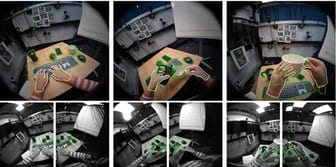
    ChinaTalk reports: The third wave of data collection for humanoid robot training - taking the NVIDIA EgoScale project as an example

    NVIDIA EgoScale project collects first-person video data for 20,854 hours from 1000 participants by installing cameras on their foreheads and wrists to train humanoid robot hand skills; this new method, called 'ego-centric data collection', marks the third generation of humanoid robot data collection, aiming to solve the fatigue, cost, and accuracy problems of traditional remote operation and isomorphic exoskeleton methods.

Mar 6Fri
  1. Anthropic Research78

    Anthropic reverse-engineers Claude to write exploits for CVE-2026-2796

    Anthropic has published research reverse-engineering how Claude Opus 4.6 generated a usable exploit for Firefox's CVE-2026-2796 (already patched), marking the first model observed by Anthropic to complete a browser vulnerability exploit with minimal human guidance.

    Why it matters: Anthropic has revealed the complete process of Claude Opus 4.6 autonomously generating a browser vulnerability exploit, comparing it to failures by multiple models.