Skip to content
Live
  1. The Verge · AI82

    Google releases Gemini 4 Hydrogen, capable of breaking down complex problems into multiple parts

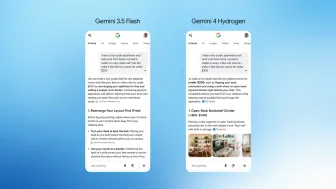
    Google has released the Gemini 4 Hydrogen model, claiming it can better answer complex questions that involve multiple parts, spelling errors, or highly specific requirements, and will break down the problem and respond item by item.

    Why it matters: The original text listed the default position and available entries of Gemini 4 Hydrogen in search and Gemini applications, allowing readers to judge its impact on the existing search and Q&A process.

  2. Google DeepMind87

    Google DeepMind releases Gemini 4 Hydrogen model

    Google DeepMind releases Gemini 4 Hydrogen, targeting daily coding and intelligent agent workflows, with an Artificial Analysis intelligence index of 51 at the default high thinking level, higher than Argon's 50, and reaching 54 at the xhigh level

    Why it matters: Google provides the division of labor and positioning of Hydrogen, Carbon, and Argon, as well as the actual differences in cost and speed between multi-model arrangements.

  1. The Decoder78

    Google launches Gemini Decision 1 and Gemini Decisions API, capable of processing 1000 issues at a time

    Google DeepMind launches Gemini Decisions API, targeting yes/no, multiple choice, and scale scoring for closed-form judgments. The underlying model, Gemini Decision 1, can handle up to 1000 independent questions at once, covering text, images, audio, video, and PDF.

    Why it matters: Gemini Decision 1 makes closed-loop judgment an independent API and provides latency, price, and benchmark performance for comparison with recent similar decision models.

  1. Google DeepMind66

    DeepMind releases AlphaGenome 2, predicting DNA variation impacts by cell type

    Google DeepMind releases AlphaGenome 2, a conditional DNA sequence model that can predict the impact of DNA mutations on gene expression for specific cell types or states.

    Why it matters: Officially disclosed the conditional architecture modification and single-cell level evaluation comparison, which can understand how the model localizes the effect of mutation to specific cell types.

  1. Google DeepMind76

    Google DeepMind releases Gemini Robotics 2.5 vision-language-action model

    Google DeepMind released Gemini Robotics 2.5, claiming it is the most capable vision-language-action (VLA) model to date, with a 30% to 100% increase in success rate on 200 tasks compared to previous baselines, and 20% to 30% faster task completion speed.

    Why it matters: Officially disclosed were 200 task evaluations and actual production line test data showing a 96% success rate for Mercedes-Benz, which can be used to judge the extent of VLA model deployment in real industrial scenarios.

  1. QbitAI71

    360 DragonBox tops CyberGym rankings with 99.4% vulnerability reproduction success rate

    360's self-developed AI security offense and defense system, DragonBox, tops the CyberGym rankings with a 99.4% vulnerability reproduction success rate, with independent evaluation success rates of 99.27%, 99.47%, and 99.40% over three rounds.

    Why it matters: The original text provides DragonBox's success rates in the three rounds of CyberGym evaluations and its training routes, allowing readers to judge the approach of large security models combined with intelligent swarm agents.

  2. Google DeepMind78

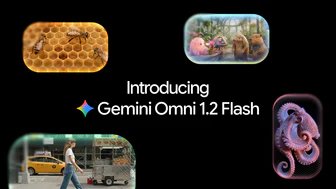
    Google DeepMind has released Gemini Omni 1.2 Flash, supporting 15-second videos and reducing the price by 30%.

    Google DeepMind has released Gemini Omni 1.2 Flash, increasing the native video generation duration from 10 seconds in Omni 1.1 to 15 seconds, and it has been fully opened in the Gemini API and Gemini for business.

    Why it matters: The original text lists specific changes in duration, price, and reference consistency, allowing readers to judge how the cost and workflow of video generation will change.

  1. Latent Space82

    Gemini 4 Carbon topped multiple lists and was the first to be opened to cybersecurity defenders.

    Google DeepMind released Gemini 4 Carbon, only two weeks after Argon, claiming to achieve SOTA in cybersecurity and long-period tasks, ranking first with a score of 59 on the Artificial Analysis Intelligence Index v5.

    Why it matters: Summarizes the positions and pricing of Gemini 4 Carbon on multiple independent lists, and lists the gaps in coding, hallucination rate, etc., compared to competitors.

  2. Google DeepMind87

    Google DeepMind releases the Gemini 4 Carbon cutting-edge model

    Google DeepMind has opened Gemini 4 Carbon to developers, enterprises, scientists, and consumers, claiming it has reached cutting-edge levels in network security capabilities and long-range intelligent agent workflows.

    Why it matters: The official provides the positioning division of roles between Carbon and Argon, multiple benchmark rankings, and cost comparisons per task to help determine when to use a heavier model.

  1. Google DeepMind84

    Google DeepMind releases world model Genie 4

    Google DeepMind releases world model Genie 4, which can generate interactive simulated worlds with native audio in real-time, and change weather, camera angles, and scene elements in real-time with text prompts. Genie 4 natively generates environmental sounds and voice conversations for the first time, with characters able to converse in real-time and respond to scene events; Gemini 3.8 Flash acts as a guiding intelligence in the loop, breaking down goals into steps and verifying frame by frame.

    Same story · 7 outlets

    How the accounts differ:The Verge states the model supports up to two minutes of scenes, while Ars Technica and TechCrunch mention improvements in physics and character simulation but do not specify the scene duration.

    Why it matters: The official disclosure of three capabilities—native audio, real-time text control, and Gemini-guided reasoning—can be used to judge the position of the world model in robotics and content preview.

  1. Google AI Blog90

    Google has released the Gemini 4 Argon cutting-edge model.

    Google has released Gemini 4 Argon, opening it up to developers, businesses, and researchers, with API pricing at $2 per million input tokens and $10 per million output tokens, offering a 95% discount on cached input tokens.

    Why it matters: Official pricing, baseline rankings, and multiple internal implementation cases are provided, allowing judgment on its position in coding and research workflows.

You are all caught up