Skip to content
Live
  1. ITHome · AI82

    Google expands the Antigravity multi-agent system, launches the Teamwork system, and verifies multiple mathematical proofs.

    Google announces expansion of its Antigravity multi-agent system, forming the Teamwork system with multiple professional agents driven by Gemini, capable of verifying complex mathematical proofs and optimizing software system performance.

    Why it matters: The original text provides specific outputs and open access points for multi-agent systems in mathematical formalization, molecular recognition, and code rewriting, which can be used to assess the practical boundaries of their collaborative verification mechanisms.


  2. Google Research88

    Google Opens /teamwork Multi-Agent Workflow in Antigravity

    Google has opened the /teamwork multi-agent workflow in Antigravity to external researchers and developers, which can be used in conjunction with Gemini 4 Argon, Carbon, and Hydrogen; /boost and Deep Review are also available.

    Why it matters: Google has disclosed /teamwork's specific results in multi-agent research and engineering tasks and made it available for external researchers to use.

  1. Latent Space88

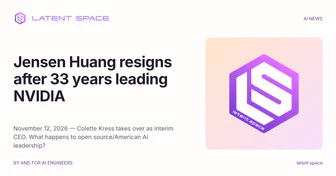
    Huang Renxun Resigns as NVIDIA CEO, Colette Kress Takes Over as Interim CEO

    NVIDIA announced that Huang Renxun resigned from his positions as CEO, President, and Board Member after 33 years in charge, SEC filings show the board accepted the resignation on November 11, and the company announced it on November 12; Colette Kress, who has been CFO since 2013, retains her position and takes over as interim CEO, Harvey Jones becomes the first chairman of the board, and the board has launched a search for a successor.

    Why it matters: NVIDIA's board accepted Huang Renxun's resignation and the CFO temporarily took over, while Anthropic submitted its IPO registration documents, two personnel and capital actions occurred on the same day.

  2. Google AI Blog82

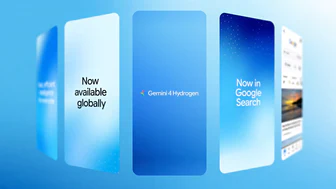
    Google Search has integrated Gemini 4 Hydrogen and is now open to global users.

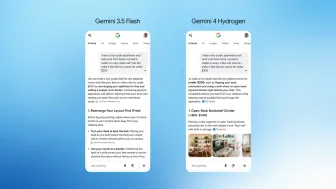
    Google Search has launched Gemini 4 Hydrogen, the largest model upgrade to date, now available to all global users. The company claims the new model can understand multi-part questions, spelling errors, and highly specific requests, and leverages stronger instruction following and tool calling capabilities to respond to each question individually. Hydrogen's reasoning ability also enhances query distribution, allowing it to retrieve multiple related subtopics simultaneously and provide more images, structured responses, comparison tables, and custom tools.

    Why it matters: Google's official statement on Gemini 4 Hydrogen explains changes in intent understanding, query distribution, and visual responses in search, which can be used to judge the direction of adjustments to the search experience.

  3. Google DeepMind87

    Google DeepMind releases Gemini 4 Hydrogen model

    Google DeepMind releases Gemini 4 Hydrogen, targeting daily coding and intelligent agent workflows, with an Artificial Analysis intelligence index of 51 at the default high thinking level, higher than Argon's 50, and reaching 54 at the xhigh level

    Why it matters: Google provides the division of labor and positioning of Hydrogen, Carbon, and Argon, as well as the actual differences in cost and speed between multi-model arrangements.

  1. Google AI Blog78

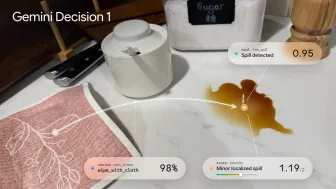
    Why it matters: The original text provides forward scoring, latency, and pricing data, allowing readers to judge its suitability for which low-latency decision-making scenarios.

  2. Google Developers Blog78

    Google releases generative UI open protocol A2UI 1.0

    Google has released the Generative UI Open Protocol A2UI 1.0, which is the first stable version of the protocol, allowing AI agents to respond with interactive interfaces instead of plain text. Version 1.0 adds bidirectional function calls, accessibility support, and extended metadata, and provides open-source rendering SDKs for Web, Android, iOS, as well as agent SDKs for Python, TypeScript, and Dart.

    Why it matters: A2UI 1.0 extends agent output from pure text to native interactive interfaces, providing multi-platform renderers and integration scheme examples, allowing for judgment on the implementation methods of generative UI.

  1. Google DeepMind66

    DeepMind releases AlphaGenome 2, predicting DNA variation impacts by cell type

    Google DeepMind releases AlphaGenome 2, a conditional DNA sequence model that can predict the impact of DNA mutations on gene expression for specific cell types or states.

    Why it matters: Officially disclosed the conditional architecture modification and single-cell level evaluation comparison, which can understand how the model localizes the effect of mutation to specific cell types.

  1. Google DeepMind76

    Google DeepMind releases Gemini Robotics 2.5 vision-language-action model

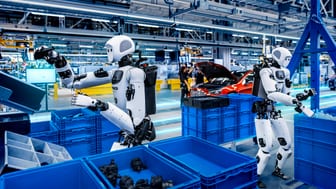
    Google DeepMind released Gemini Robotics 2.5, claiming it is the most capable vision-language-action (VLA) model to date, with a 30% to 100% increase in success rate on 200 tasks compared to previous baselines, and 20% to 30% faster task completion speed.

    Why it matters: Officially disclosed were 200 task evaluations and actual production line test data showing a 96% success rate for Mercedes-Benz, which can be used to judge the extent of VLA model deployment in real industrial scenarios.

  2. The Decoder85

    Google DeepMind releases AlphaProof Code, a four-week verification of the Signal encryption core

    Google DeepMind releases AlphaProof Code, an AI-powered mathematical proof software that meets security specifications, and completes the verification work usually requiring several years on the Signal encryption protocol in just four weeks.

  3. One Useful Thing78

    Ethan Mollick practically tests Claude Fable 5.2: Close but not complete AGI

    Ethan Mollick, after trying out Claude Fable 5.2 before its public release, believes that according to the definition of 'achieving the level of most human experts on most available computer-completed intellectual tasks,' it is close to AGI but still has a gap.

    Why it matters: The author uses six cross-domain practical cases to illustrate that the model's ability has approached general intelligence, but lacks the ability to judge whether works are good or bad.

  4. Google Developers Blog60

    Google AI Studio supports building Google Maps applications with prompt words

    Google AI Studio can now directly build applications driven by Google Maps Platform, where users describe their ideas and AI Studio automatically completes configuration and API key management without a credit card.

    Why it matters: The original text provides daily quotas without a credit card and a complete path from prompt words to a runnable map application, allowing readers to judge the cost of prototype construction based on this.

  1. Big Technology78

    The aftermath of Huang Renxun's 'honey pot' controversy: NVIDIA board investigation and the direction of export controls.

    NVIDIA CEO Huang Renxun admitted to having a relationship with a woman considered a Chinese spy by U.S. intelligence. The board stated there was no reason to believe national security or NVIDIA secrets had been compromised but has launched an investigation. The article suggests his previous opposition to China's chip export controls may weaken, potentially pushing for stricter controls, while Dario Amodei of Anthropic could benefit from Google; as anti-AI Democrats are set to gain power in Congress, Huang Renxun may also face pressure from hearings.

    Why it matters: An article discusses how the alleged involvement of NVIDIA CEO Huang Renxun with a woman believed to be a Chinese spy could lead to changes in the NVIDIA board's investigation, export control stance, and potential congressional hearings.

  2. Google Developers Blog65

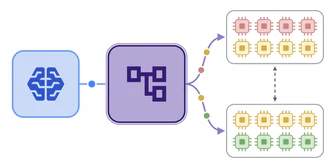
    Google details Pathways: a single controller training system for large models.

    Google announces Pathways is now generally available on Google Cloud Platform, which is Google's distributed system used to train its own large models like Gemini.

    Why it matters: Google engineers explain the single controller execution model of Pathways and provide a layered difference with Ray for judging the selection of large-scale training orchestration.

  1. The Decoder71

    Google AI detects hypertension using a regular smartwatch without a cuff

    Google Research's AI detects signs of hypertension without blood pressure cuff calibration, using only the pulse and motion sensors already in smartwatches, with related research published in Nature. The neural network learns pulse and heartbeat patterns by comparing short segments from nearly 500,000 hours of sensor data to identify which segments belong to the same person, then averages multi-day data to calculate the probability of hypertension.

    Why it matters: Readers can learn about a smartwatch blood pressure detection study that requires no cuff calibration, and its comparison results with traditional measurements in tests on 196 people.

  1. QbitAI71

    360 DragonBox tops CyberGym rankings with 99.4% vulnerability reproduction success rate

    360's self-developed AI security offense and defense system, DragonBox, tops the CyberGym rankings with a 99.4% vulnerability reproduction success rate, with independent evaluation success rates of 99.27%, 99.47%, and 99.40% over three rounds.

    Why it matters: The original text provides DragonBox's success rates in the three rounds of CyberGym evaluations and its training routes, allowing readers to judge the approach of large security models combined with intelligent swarm agents.

  2. Google DeepMind78

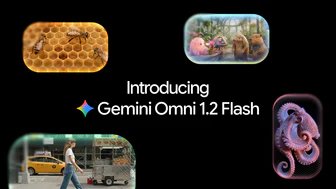
    Google DeepMind has released Gemini Omni 1.2 Flash, supporting 15-second videos and reducing the price by 30%.

    Google DeepMind has released Gemini Omni 1.2 Flash, increasing the native video generation duration from 10 seconds in Omni 1.1 to 15 seconds, and it has been fully opened in the Gemini API and Gemini for business.

    Why it matters: The original text lists specific changes in duration, price, and reference consistency, allowing readers to judge how the cost and workflow of video generation will change.

  3. Google Research72

    Google Research uses smartwatch sensors to identify signs of hypertension.

    Google Research published a multimodal AI system AI-PPG-ACC-HTN in Nature, which passively identifies hypertension status without wristband calibration, using only PPG and accelerometer data from consumer-grade smartwatches.

    Why it matters: The study passively identifies hypertension using PPG and accelerometer data from smartwatches, providing quantitative results for screening and confirmation in two stages, with 24-hour dynamic blood pressure monitoring as the gold standard.