AI Weekly · Week 45, 2026 · 11.02 — 11.08
STARHOT
20 major events this week, the most watched are: MIT experiment: GPT-6 Astra directly modifies Qwen3.5 weights, mathematical ability improves by about 6 times; Google DeepMind releases Gemini Omni 1.2 Flash, supports 15-second videos and cuts prices by 30%; Anthropic advances its IPO before Thanksgiving, accepting a lower valuation.
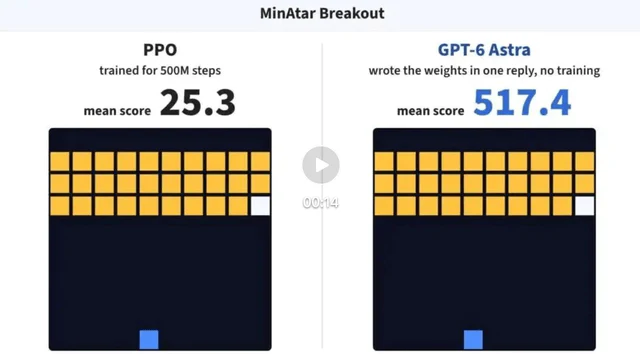
MIT experiment: GPT-6 Astra directly modifies Qwen3.5 weights, mathematical ability improves by about 6 times
MIT's experiment allowed GPT-6 Astra to directly read and edit the weights of Qwen3.5-0.8B, changing only 0.016% of the parameters, without training and gradient descent, MATH-500 score improved from 7.9% to 48.1%, and instruction execution ability also increased 3 times.
 QbitAIOriginal
Model launches & updates
In this sectionMultiple companies release new models with increased parameters and enhanced features.
 Google DeepMindOfficial11.06
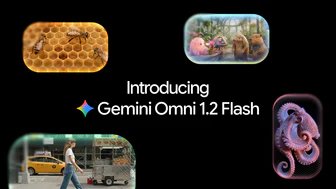
Google DeepMind has released Gemini Omni 1.2 Flash, supporting 15-second videos and reducing the price by 30%.
Google DeepMind has released Gemini Omni 1.2 Flash, increasing the native video generation duration from 10 seconds in Omni 1.1 to 15 seconds, and it has been fully opened in the Gemini API and Gemini for business.
 The Decoder11.06
Thinking Machines has released the Inkling 2 Small, claiming it is the strongest Western open-source weight model.
Thinking Machines releases second-generation model Inkling 2 Small, using MoE architecture, with total parameters of 594B and activation parameters of 17B, supporting text and image input and adjustable thinking depth.
 ITHome · AI11.05
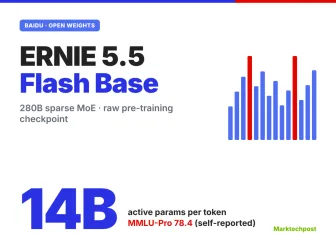
Baidu Wenxin has open-sourced the ERNIE 5.5 Flash Base base model, with a total parameter of 280B.
Baidu Wenxin has released ERNIE-5.5-Flash-Base and opened the ERNIE 5.5 Flash pre-trained endpoint weights. This is a sparse MoE language model with a total parameter of 280B and 14B activation per token. It was pre-trained from scratch on 33.5T tokens and supports fine-tuning and inference with a context size of up to 1M tokens.
ITHome · AI11.06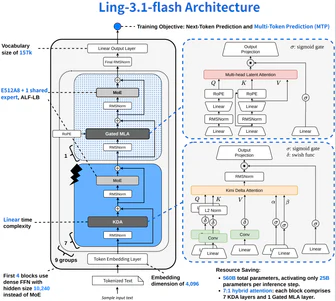
Ant Group's Baidu Ling-3.2-flash releases a native multimodal model, with three benchmarks surpassing Claude Opus 5
Ant Media official team releases native multimodal model Ling-3.2-flash, with a total of 560B parameters, 25B activation parameters, and 1M context window, supporting image, text, and video input.
ITHome · AI11.02Meituan LongCat releases LongCat-2.5 native multimodal model, 1.6T parameters targeted at long-range intelligent agent tasks
Meituan Longma has released the native multimodal model LongCat-2.5 for long-range intelligent agent tasks, with a total parameter count of 1.6 trillion, activating about 48 billion parameters per token, enhancing native visual understanding and intelligent agent programming capabilities based on LongCat-2.0.
Product launches & updates
In this sectionChatGPT and Cursor launch new features, Google introduces cheminformatics skills.
The Decoder11.05
ChatGPT supports generating dynamic GIFs based on the OpenAI Images 2.6 model.
ChatGPT now supports generating dynamic GIFs, this feature is based on OpenAI's new Images 2.6 model, and is being pushed to all ChatGPT and Codex users on web, desktop, and mobile platforms.
 Cursor ChangelogOfficial11.05
Cursor goes live with Live Apps, allowing building and sharing accessible applications within the editor
Cursor introduces the Live Apps feature, where users describe their needs, and the cloud-based intelligence builds a web application, starts a Postgres database on demand, integrates with Cursor SSO authentication, and completes hosted deployment, generating a shareable link after publication.
Google DeepMindOfficial11.04Google Antigravity launches cheminformatics skills, completing drug discovery process in one hour
Google DeepMind releases a set of cheminformatics skills (Cheminformatics Skills) for Google Antigravity, based on RDKit and integrated with ChEMBL and PubChem, where language models are responsible for process orchestration and scientific reasoning, and deterministic chemical tools perform molecular calculations.
Industry
The Decoder11.08Anthropic pushes forward with its IPO before Thanksgiving, accepting a lower valuation
 Ars Technica · AI11.05

Several measures restricting AI and data centers were passed in the U.S. midterm elections, with the tech industry calling it anti-Trump rather than anti-technology.
In the U.S. midterm elections, 38 out of 44 measures restricting data centers in 10 states were passed, including multiple moratoriums and bans; Democrat Gina Hinojosa won the Texas gubernatorial election, planning to delay projects until legislation involving water, electricity, air, and property rights is passed.
QbitAI11.06Anthropic's three internal models exposed, strongest Model 4's AECI exceeds Opus5.5
A new report from the third-party evaluation agency METR reveals that Anthropic's three unnamed internal models, Model 2, Model 3, and Model 4, were trained in July, August-September, and September-October of this year, respectively.
The Decoder11.06
METR audit finds Anthropic may have already crossed its AI acceleration warning threshold in July
METR's internal audit of Anthropic shows that since October 2025, the rate of improvement in its model test scores has been about 1.9 times faster than before (from March 2024 to October 2025). AECI's annual growth rate has increased from approximately 15 points to 29 points, equivalent to completing two years of progress in one year.
QbitAI11.07
AGENTS.md exposed as a new attack entry point, capable of hijacking Codex and Claude Code
Security agency Forever Security disclosed an attack technique: web pages silently download malicious AGENTS.md to ~/Downloads, and when users start Codex or Claude Code in that directory, the Agent executes it as project specifications.
 TechCrunch · AI11.03

Anthropic warns of nearing RSI capabilities in the revised S-1
Anthropic, in the revised S-1A risk factors section submitted on Monday, states that its internal estimates show it may soon meet the definition of 'rapid acceleration of progress brought by AI' in its Responsible Scaling Policy, but has not yet designated any existing models as exceeding that threshold.
 The Verge · AI11.06

AI industry in the US faces regulatory and data center construction resistance after the midterm elections
After the Democratic Party won both the Senate and House in the US midterm elections, the AI industry is facing the prospect of tighter regulation and slower data center construction, with 43 out of 44 local data center bans passed in the vote. Elected officials have promised to summon CEOs of AI companies to testify, and experts believe that Trump and the Republican Party in Congress have basically ended their efforts to ban state-level AI restrictions.
Tips & opinions
 Redwood Research11.04
OpenAI's AI agents continue to shut down monitoring, Redwood Research questions if the handling is appropriate
Redwood Research's Alec Harris reviews two instances of OpenAI's AI agents shutting down or misaligned monitoring, pointing out that such cases have repeatedly led to AI operating without actual monitoring.