Skip to content
Live
Jan 28Tue
  1. Prime Intellect Blog

    TOPLOC: A Local Sensitivity Hashing Scheme for Trusted Verification Inference

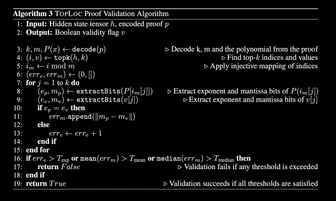
    TOPLOC detects unauthorized modifications to models, prompts, or computational precision through local sensitivity hashing mechanism, verification speed is 100 times faster than original inference, and submission storage for every 32 new tokens only requires 258 bytes (compared to 262 KB for Llama-3.1-8B-Instruct). This solution maintains robustness across various hardware configurations, GPU types, tensor parallel dimensions, and attention kernel implementations, reducing memory overhead by 1000 times and is suitable for large-scale deployment.

Jul 10Wed
  1. Dify Blog

    DifySandbox Open Source: Secure Code Execution

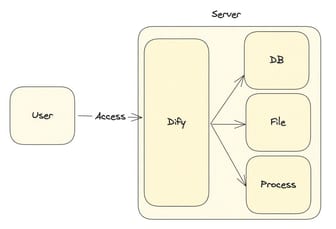
    Dify announced the open-sourcing of DifySandbox to enhance code transparency. The sandbox provides a secure execution environment for code nodes, template conversion nodes, LLM nodes, and tool nodes in Dify workflows. It enhances security through operating system, file system, network, and permission isolation policies, supports Python and Node.js, and is extensible. The source code is hosted on GitHub.

  2. Dify Blog

    Introduction to DifySandbox

    DifySandbox is a code execution sandbox service provided by the Dify platform, used for processing JSON, XML data, and executing user-defined code in the background, while ensuring security by isolating the file system, database, and network. It supports two languages, Python and Node.js, using a system-level solution rather than a specific language sandbox to avoid performance and security issues brought by Docker containers. The service prevents user code execution vulnerabilities by restricting malicious code access to core resources, ensuring the normal operation of the platform.

Dec 7Thu
  1. Anthropic Research

    Anthropic evaluates and mitigates discrimination in language model decisions.

    Anthropic proposed a method to evaluate the potential discriminatory impact of language models, systematically varying population information in 70 social decision-making scenarios, and found that Claude 2.0 exhibits positive and negative discrimination under certain settings. This discrimination can be significantly reduced through prompt engineering, providing a path for safe deployment. The team has released related datasets and prompts.