Skip to content
Live
  1. QbitAI72

    Baidu Wenxin has first disclosed the progress of RSI, and ERNIE Evolve has been used in the development of Wenxin 5.5 Flash.

    Baidu Wenxin first disclosed its automatic research system ERNIE Evolve, which can autonomously propose research directions, conduct experiments, and validate results. It has been used for inference optimization in Wenxin 5.5 Flash. In the low-latency scenario optimization for Kunlun Chip P800, ERNIE Evolve took about 168 hours and went through 4 rounds of direction exploration, with the optimal version's generation speed increasing to 623.6% of the baseline. The deterministic reasoning throughput optimization increased the throughput to 133.7% of the baseline in 3 days.

    Why it matters: Baidu has disclosed the architecture and production environment optimization data of the automatic research system ERNIE Evolve, which can observe the actual landing points of RSI in inference optimization.


  1. vLLM Blog72

    REINFORCE Zero: Aligned kernel allows asynchronous RL to train stably under lag 64.

    NVIDIA Research and Inferact's REINFORCE Zero proposes to first align rollout with training kernel, then use unclipped token-level importance sampling to correct weight lag, achieving a training step throughput 2.40 times that of synchronous training under 16 GPUs and 12K updates.

    Why it matters: The paper breaks down the gap between asynchronous RL's rollout and training into two items: weight lag and kernel inconsistency, and proposes an alignment-free, no-trimming importance sampling method after alignment.

  1. Anthropic Research62

    Anthropic has released the verifiable reasoning system FlashProve, generating proofs at approximately 110 tokens/second on a single H100.

    Anthropic announced the verifiable reasoning prototype FlashProve, using zkSNARK to prove that the response indeed comes from the committed model weights. For the 400B parameter Llama 4 Maverick (4-bit quantization), a single H100 generates proofs at approximately 110 tokens/second, with proofs for each 1,024 token request being about 19 MB, and verification on a 24-core CPU taking about 17 seconds.

    Same story · 2 outlets

    How the accounts differ:MarkTechPost states the proof volume is 18.78 MB; The Decoder states it is about 19 MB.

    Why it matters: Anthropic has released the measured data and Lean formal proof of the verifiable reasoning prototype FlashProve, allowing for a cross-comparison with existing zkML solutions.

  2. QbitAI80

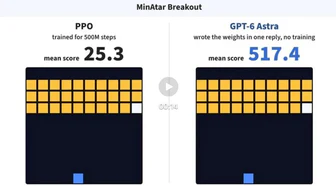
    MIT experiment: GPT-6 Astra directly modifies Qwen3.5 weights, mathematical ability improves by about 6 times

    MIT's experiment allowed GPT-6 Astra to directly read and edit the weights of Qwen3.5-0.8B, changing only 0.016% of the parameters, without training and gradient descent, MATH-500 score improved from 7.9% to 48.1%, and instruction execution ability also increased 3 times.

    Why it matters: MIT experiments show that cutting-edge models can directly read and write the weights of smaller models, providing a reproducible path for performance repair of gradient-free training.

  1. QbitAI78

    PSI claims AI-assisted resolution of 5 open problems in quantum information

    Physical Superintelligence (PSI) claims to have achieved results on 5 open problems in quantum information theory with the help of its self-developed AI research system Emmy. Papers, Lean formal proofs, and verification code have been released on GitHub for review.

    Why it matters: Readers can see a new company challenging quantum open problems with a process that separates generation from formal verification, and learn about its team and funding background.

You are all caught up