Skip to content
Live
  1. Google DeepMind76

    Google DeepMind releases Gemini Robotics 2.5 vision-language-action model

    Google DeepMind released Gemini Robotics 2.5, claiming it is the most capable vision-language-action (VLA) model to date, with a 30% to 100% increase in success rate on 200 tasks compared to previous baselines, and 20% to 30% faster task completion speed.

    Why it matters: Officially disclosed were 200 task evaluations and actual production line test data showing a 96% success rate for Mercedes-Benz, which can be used to judge the extent of VLA model deployment in real industrial scenarios.

  1. Hugging Face Blog71

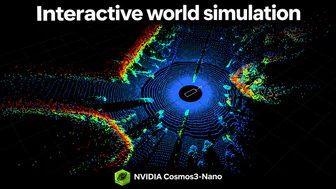
    NVIDIA has released four open-source world model checkpoints for Cosmos 3.

    NVIDIA has added four new open-source weight checkpoints for Cosmos 3 under the Cosmos World Model platform, all of which are post-trained versions of Cosmos 3 Nano, containing 16B trainable parameters, using the OpenMDW1.1 license, allowing commercial and non-commercial use.

    Why it matters: The original text provides four open-source weight checkpoints and a four-stage training recipe, allowing readers to judge how to adapt the world model to their own sensors and robot bodies.

  1. ITHome · AI78

    Zhiyuan released the embodied model GO-3 Preview, topped three major lists, and plans to open source by the end of 2026.

    Zhiyuan launched the embodied model GO-3 Preview on October 29, adopting an embodied-native WRAM architecture that connects task reasoning, future prediction, and action generation, and has topped the three major evaluation lists: RoboDojo, RoboTwin, and RoboColiseum. It plans to fully open source by the end of 2026.

    Why it matters: The deployment data provided by the original text shows a success rate of real-life convenience store tasks ranging from 28.6% to 85.7%, which can be observed as the path of online self-improvement of embodied models.

  1. Hugging Face Blog66

    NVIDIA has released the Cosmos3-H-Dreams surgical generative simulation model.

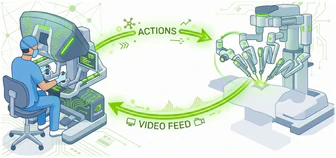
    NVIDIA has released Cosmos3-H-Dreams, extending interactive generative simulation to clinical gallbladder removal scenarios, capable of generating surgical scenes in real-time based on instrument movements.

    Why it matters: The original text explains the migration path from desktop stitching to clinical cholecystectomy scenarios, as well as the trade-off between quality and delay between four-step and two-step distillation checkpoints.

You are all caught up