Skip to content
Live
  1. Hacker News · AI hot posts86

    Edge0 open sources 145B and 120B edge-side models and inference frameworks.

    Edge0 open-sourced the Edge0-145B and Edge0-120B two edge models, and also released a unified inference framework and deployment tools. Officially, the 145B model can run locally on compatible laptops, with peak memory of 29GB, decoding speed of 80+ tokens/s, pre-filling speed of 1100+ tokens/s, supporting context lengths of 128K–256K.

    Why it matters: The original text provides actual memory, speed, and multiple benchmark comparisons of the edge 145B model, which can be used to judge the practical boundaries of running cutting-edge models locally.


  2. Hugging Face Blog71

    IBM releases LLMON markup language and Granite 4.1 3B/8B preview models

    IBM released LLMON (LLM Object Notation) markup language on Hugging Face and launched two experimental preview models based on Granite 4.1: granite-4.1-3b-LLMON-preview and granite-4.1-8b-LLMON-preview, while also open-sourcing a GitHub toolkit.

    Why it matters: The original text provides the design motivation for the LLMON markup language and the two preview models, allowing readers to understand how separating instructions and data can reduce the risk of indirect prompt injection.

  1. MiniMax News80

    MiniMax releases open-source image generation model H3-Image

    MiniMax has released an open-source weight image generation model based on H3, H3-Image, which supports text-to-image, reference image generation, and image editing, capable of generating 4096 × 4096 4K images within 10 seconds, and supports up to 16 reference images.

    Why it matters: The official provides 4K generation speed, reference image quantity, and pricing range, which can be used to judge the gap between open-source image models and closed-source solutions.

  1. QbitAI82

    Tencent Hunyuan Hy4 released: 770B total parameters, 49B activation parameters, first supports native vision and computer operation

    Tencent Mixuan Hy4 is officially released, with a total of 770B parameters and 49B activation parameters. It introduces native visual capabilities and computer operation support for the first time, while also upgrading command compliance, long text understanding, and long-range Agent capabilities. The model has been launched on products such as Tencent Cloud TokenHub, WorkBuddy/CodeBuddy, and Yuanbao. API access has been provided to platforms like OpenRouter, Hermes, and OpenCode, with weights to be open-sourced in the near future.

    Why it matters: The author uses multiple long-range tasks to test the autonomous execution and self-check capabilities of the open-source model 'Hunyuan Hy4', thereby judging the actual level of open-source models in Agent delivery.

  1. Hugging Face Blog71

    NVIDIA has released four open-source world model checkpoints for Cosmos 3.

    NVIDIA has added four new open-source weight checkpoints for Cosmos 3 under the Cosmos World Model platform, all of which are post-trained versions of Cosmos 3 Nano, containing 16B trainable parameters, using the OpenMDW1.1 license, allowing commercial and non-commercial use.

    Why it matters: The original text provides four open-source weight checkpoints and a four-stage training recipe, allowing readers to judge how to adapt the world model to their own sensors and robot bodies.

  1. Hugging Face Blog72

    Phonon TTS releases on-device speech models, topping multiple metrics on the Hugging Face open TTS leaderboard

    Phonon releases a small TTS model that can run on local devices, without a server and network, offering two versions of about 65 MB and 75 MB, covering English, French, German, Spanish, and Portuguese.

    Why it matters: The original text outlines the specifications, open-source license, and leaderboard performance of on-device TTS models, allowing judgment on the usability boundary of small models in local voice scenarios.

  2. ITHome · AI74

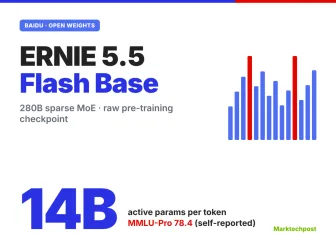
    Baidu Wenxin has open-sourced the ERNIE 5.5 Flash Base base model, with a total parameter of 280B.

    Baidu Wenxin has released ERNIE-5.5-Flash-Base and opened the ERNIE 5.5 Flash pre-trained endpoint weights. This is a sparse MoE language model with a total parameter of 280B and 14B activation per token. It was pre-trained from scratch on 33.5T tokens and supports fine-tuning and inference with a context size of up to 1M tokens.

    Why it matters: The original text provides the parameters, training data size, and open-source weights of the 280B sparse MoE base, allowing readers to judge its adaptability as a fine-tuning starting point.

  1. ITHome · AI78

    Xiaomi open-sources 0.8B document understanding model Xiaomi-OCR-0, supporting Markdown and JSON output

    Xiaomi open-sources lightweight document understanding model Xiaomi-OCR-0, with 0.8B parameter size, weights and inference code have been uploaded to Hugging Face and GitHub, a single model covers three tasks of document parsing, key information extraction, and OCR visual question answering.

    Why it matters: 0.8B parameters rank second on the overall list in OmniDocBench v1.6, and weights, MCP services, and Skill toolkits are also opened, which can be used to judge the boundary of small models for document parsing.

  2. ITHome · AI74

    Qwenputer Launched: Embedding the RISC-V CPU instruction set into the model, AI arithmetic no longer relies on external tools

    Developer Divyansh Agrawal released the experimental model Qwenputer on October 22, built based on Alibaba's Qwen3.5-4B, which implements 32-bit RISC-V CPU and memory functions inside the neural network, allowing program execution and precise calculations without calling external tools like Python.

    Why it matters: Developers compiled the RISC-V instruction set into the Qwen3.5-4B weights, demonstrating with specific benchmark numbers the improvement in computational precision within the model and the trade-offs in volume and speed.

  3. ITHome · AI78

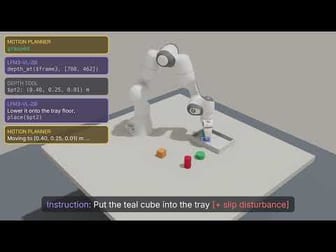
    Zhiyuan released the embodied model GO-3 Preview, topped three major lists, and plans to open source by the end of 2026.

    Zhiyuan launched the embodied model GO-3 Preview on October 29, adopting an embodied-native WRAM architecture that connects task reasoning, future prediction, and action generation, and has topped the three major evaluation lists: RoboDojo, RoboTwin, and RoboColiseum. It plans to fully open source by the end of 2026.

    Why it matters: The deployment data provided by the original text shows a success rate of real-life convenience store tasks ranging from 28.6% to 85.7%, which can be observed as the path of online self-improvement of embodied models.

  1. Hugging Face Blog85

    Mistral Large 4 (Le Chonk) released on Hugging Face

    Mistral releases multimodal MoE model Mistral Large 4 (Le Chonk), with approximately 1T total parameters, 49B activation parameters, a context window of 1M tokens, offering two official versions FP8 and NVFP4, as well as GGUF made by Unsloth and llama.cpp teams.

    Why it matters: The original text provides specific scores for the 1T total parameter, 49B activation multimodal MoE model on cybersecurity and coding benchmarks, along with measured throughput for local and endpoint deployment.

  2. Mistral AI82

    Mistral releases open-source model Mistral Large 4 (Le Chonk) with trillion parameters

    Mistral releases open-weight version of its flagship trillion-parameter native multimodal model Mistral Large 4 (Le Chonk), which has been in public preview for three weeks.

    Why it matters: The official provides data on the encoding, security, and inference efficiency of the trillion-parameter open-source model, as well as weight downloads and self-hosting paths.

  1. ITHome · AI78

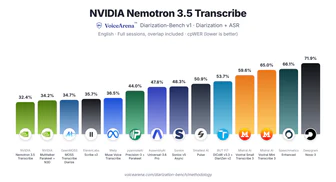
    NVIDIA open-sourced the speech transcription model Nemotron 3.5 Transcribe, supporting 40 languages and 8 speaker separation.

    NVIDIA launched the open-weight speech transcription model Nemotron 3.5 Transcribe on October 28, integrating transcription, speaker attribution, translation, and audio Q&A, using the MoE architecture, with total parameters of about 34 billion and activation parameters of about 4.3 billion, capable of processing the longest recording of 1 hour, supporting transcription of 40 languages, and distinguishing up to 8 speakers.

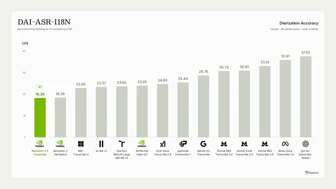
    Why it matters: NVIDIA open-sourced the speech transcription model, disclosing parameter scale, multilingual and speaker separation capabilities, and benchmark results, allowing comparison with existing open-source ASR solutions.

  2. Hugging Face Blog78

    NVIDIA has released Nemotron 3.5 Transcribe and the Granary v2 data pipeline.

    NVIDIA has released the open-source weight model Nemotron 3.5 Transcribe, integrating transcription, speaker separation, translation, and audio Q&A into a single checkpoint, supporting transcription in 40 languages, translation between 31 languages and English, and speaker annotation in 13 languages, capable of processing the longest 1-hour recordings and annotating up to 8 speakers.

    Why it matters: The original text provides a unified weighting model for multilingual transcription, speaker separation, and translation, along with an open data pipeline and fine-tuning recipes, which can be used to determine the adaptation path for voice scenarios.

  3. Hugging Face Blog76

    Liquid AI releases LFM3 series: Same 2B backbone derived text, visual, audio, multimodal and decision models

    Liquid AI releases the new generation Liquid Foundation Models, LFM3, deriving six 2B-level models from the shared backbone LFM3-1.7B-Base, covering text, vision, audio, multimodal, and decision, all open weights on Hugging Face.

    Why it matters: Liquid AI derives six modality models from the same 2B-level backbone and provides single-card fine-tuning and edge deployment paths, which can be used to judge the specialization route for small models.

  1. QbitAI75

    The domestically developed open-source OXR tops three document parsing benchmarks with 1.3B parameters.

    The SoMark team has open-sourced the 1.3B document parsing model OXR, ranking first on three benchmarks: OmniDocBench (97.18), olmOCR-Bench (87.84), and DocParsingBench (87.76).

    Why it matters: 1.3B model trained with RSI ranks first in three document parsing rankings, and provides engineering trade-offs between plug-in architecture and free API.

  2. MarkTechPost71

    Baidu open-sources Unlimited OCR 2, supporting the parsing of hundreds of pages of documents.

    Baidu open-sources Unlimited OCR 2, a 3.34B parameter OCR visual language model that can parse hundreds of pages of books, financial reports, and reports in a single request. The weights are released under the MIT license, and the code is on GitHub.

    Why it matters: The original text provides a comparison of SR-SWA's sparse attention mechanism with the hundred-page document benchmark, showing how the contextual cost of long document OCR can be flattened.