Skip to content
Live
  1. Google DeepMind87

    Google DeepMind releases Gemini 4 Hydrogen model

    Google DeepMind releases Gemini 4 Hydrogen, targeting daily coding and intelligent agent workflows, with an Artificial Analysis intelligence index of 51 at the default high thinking level, higher than Argon's 50, and reaching 54 at the xhigh level

    Why it matters: Google provides the division of labor and positioning of Hydrogen, Carbon, and Argon, as well as the actual differences in cost and speed between multi-model arrangements.


  1. The Decoder78

    Google launches Gemini Decision 1 and Gemini Decisions API, capable of processing 1000 issues at a time

    Google DeepMind launches Gemini Decisions API, targeting yes/no, multiple choice, and scale scoring for closed-form judgments. The underlying model, Gemini Decision 1, can handle up to 1000 independent questions at once, covering text, images, audio, video, and PDF.

    Why it matters: Gemini Decision 1 makes closed-loop judgment an independent API and provides latency, price, and benchmark performance for comparison with recent similar decision models.

  1. Claude · YouTube75

    Anthropic released Claude Fable 5.2

    Anthropic releases Claude Fable 5.2, designed for the most challenging technical challenges, with improvements in coding, reasoning, and vision, suitable for the most ambitious open-ended technical work. The official recommendation is to use Opus 5.5 for most coding and knowledge tasks, and Fable 5.2 is now available in the Pro, Max, Team, and Enterprise packages.

    2 reports

    How the accounts differ:TechCrunch states the input price of Fable is reduced to $8 per million tokens; others do not mention the price.

    Why it matters: The official statement explains the positioning and applicable scenarios of Fable 5.2, and provides a choice suggestion between Opus 5.5, making it easier to decide which model to use.

  2. TechCrunch · AI72

    Meta releases lightweight model Muse Ember, highlighting agent execution and low cost.

    Meta Superintelligence Lab releases lightweight model Muse Ember, priced at 10 cents per million tokens, focusing on high-frequency agent tasks such as tool calling, coding subtasks, routing, extraction, and long document parsing.

    Why it matters: Meta uses a pricing of 10 cents per million input tokens and the Artificial Analysis comprehensive benchmark to place the lightweight model in the agent execution context, comparing it with Haiku and Luna.

  1. QbitAI82

    Tencent Hunyuan Hy4 released: 770B total parameters, 49B activation parameters, first supports native vision and computer operation

    Tencent Mixuan Hy4 is officially released, with a total of 770B parameters and 49B activation parameters. It introduces native visual capabilities and computer operation support for the first time, while also upgrading command compliance, long text understanding, and long-range Agent capabilities. The model has been launched on products such as Tencent Cloud TokenHub, WorkBuddy/CodeBuddy, and Yuanbao. API access has been provided to platforms like OpenRouter, Hermes, and OpenCode, with weights to be open-sourced in the near future.

    Why it matters: The author uses multiple long-range tasks to test the autonomous execution and self-check capabilities of the open-source model 'Hunyuan Hy4', thereby judging the actual level of open-source models in Agent delivery.

  1. The Decoder73

    Thinking Machines has released the Inkling 2 Small, claiming it is the strongest Western open-source weight model.

    Thinking Machines releases second-generation model Inkling 2 Small, using MoE architecture, with total parameters of 594B and activation parameters of 17B, supporting text and image input and adjustable thinking depth.

    Why it matters: The original text provides specific comparisons of the new model in terms of intelligence index, agent tasks, and cost, allowing readers to judge the competitive position of open-source weight models accordingly.

  2. ITHome · AI78

    Ant Group's Baidu Ling-3.2-flash releases a native multimodal model, with three benchmarks surpassing Claude Opus 5

    Ant Media official team releases native multimodal model Ling-3.2-flash, with a total of 560B parameters, 25B activation parameters, and 1M context window, supporting image, text, and video input.

    Why it matters: The original provides three benchmark comparisons and API pricing, allowing readers to judge the capability position and call cost of this multimodal model.

  3. Hugging Face Blog71

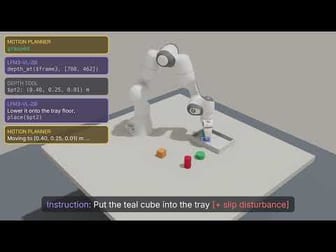
    NVIDIA has released four open-source world model checkpoints for Cosmos 3.

    NVIDIA has added four new open-source weight checkpoints for Cosmos 3 under the Cosmos World Model platform, all of which are post-trained versions of Cosmos 3 Nano, containing 16B trainable parameters, using the OpenMDW1.1 license, allowing commercial and non-commercial use.

    Why it matters: The original text provides four open-source weight checkpoints and a four-stage training recipe, allowing readers to judge how to adapt the world model to their own sensors and robot bodies.

  4. Google DeepMind78

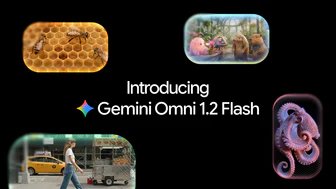
    Google DeepMind has released Gemini Omni 1.2 Flash, supporting 15-second videos and reducing the price by 30%.

    Google DeepMind has released Gemini Omni 1.2 Flash, increasing the native video generation duration from 10 seconds in Omni 1.1 to 15 seconds, and it has been fully opened in the Gemini API and Gemini for business.

    Why it matters: The original text lists specific changes in duration, price, and reference consistency, allowing readers to judge how the cost and workflow of video generation will change.

  5. The Decoder70

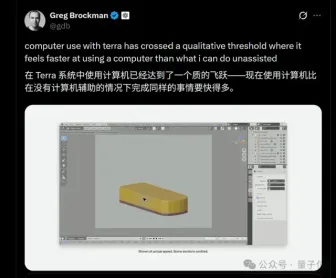
    Tencent has released the Hy4 model, which first supports image understanding and computer operation.

    Tencent has released the Hy4 model, which is capable of image understanding for the first time and can operate software such as Blender, CAD autonomously, the weight will be opened on an undetermined date later, it is currently only provided through applications such as Tencent Cloud, OpenRouter, and Yuanbao.

    Why it matters: Tencent Hy4 has joined image understanding and computer operation capabilities for the first time, there is a gap between third-party reviews and official statements, you can compare to see the real position of the open weight model.

  1. ITHome · AI78

    Xiaomi open-sources 0.8B document understanding model Xiaomi-OCR-0, supporting Markdown and JSON output

    Xiaomi open-sources lightweight document understanding model Xiaomi-OCR-0, with 0.8B parameter size, weights and inference code have been uploaded to Hugging Face and GitHub, a single model covers three tasks of document parsing, key information extraction, and OCR visual question answering.

    Why it matters: 0.8B parameters rank second on the overall list in OmniDocBench v1.6, and weights, MCP services, and Skill toolkits are also opened, which can be used to judge the boundary of small models for document parsing.

  1. Hugging Face Blog85

    Mistral Large 4 (Le Chonk) released on Hugging Face

    Mistral releases multimodal MoE model Mistral Large 4 (Le Chonk), with approximately 1T total parameters, 49B activation parameters, a context window of 1M tokens, offering two official versions FP8 and NVFP4, as well as GGUF made by Unsloth and llama.cpp teams.

    Why it matters: The original text provides specific scores for the 1T total parameter, 49B activation multimodal MoE model on cybersecurity and coding benchmarks, along with measured throughput for local and endpoint deployment.

  1. Hugging Face Blog76

    Liquid AI releases LFM3 series: Same 2B backbone derived text, visual, audio, multimodal and decision models

    Liquid AI releases the new generation Liquid Foundation Models, LFM3, deriving six 2B-level models from the shared backbone LFM3-1.7B-Base, covering text, vision, audio, multimodal, and decision, all open weights on Hugging Face.

    Why it matters: Liquid AI derives six modality models from the same 2B-level backbone and provides single-card fine-tuning and edge deployment paths, which can be used to judge the specialization route for small models.

  2. Google DeepMind84

    Google DeepMind releases world model Genie 4

    Google DeepMind releases world model Genie 4, which can generate interactive simulated worlds with native audio in real-time, and change weather, camera angles, and scene elements in real-time with text prompts. Genie 4 natively generates environmental sounds and voice conversations for the first time, with characters able to converse in real-time and respond to scene events; Gemini 3.8 Flash acts as a guiding intelligence in the loop, breaking down goals into steps and verifying frame by frame.

    Same story · 7 outlets

    How the accounts differ:The Verge states the model supports up to two minutes of scenes, while Ars Technica and TechCrunch mention improvements in physics and character simulation but do not specify the scene duration.

    Why it matters: The official disclosure of three capabilities—native audio, real-time text control, and Gemini-guided reasoning—can be used to judge the position of the world model in robotics and content preview.