Scientists Made Monkeys Watch Minions to Study Their Brains
Scientists Made Monkeys Watch Minions to Study Their Brains

Welcome back to the Abstract! These are the studies this week that watched movies, made sacrifices, got crafty, and aged backwards.
First, scientists learn how primates make meaning out of visuals by peeking into the brains of monkeys as they watch Despicable Me. Then: human sacrifice as climate “crisis rituals,” the fingerprints of prehistoric children, and the longevity secrets of ants.
As always, for more of my work, check out my book First Contact: The Story of Our Obsession with Aliens, or subscribe to my personal newsletter The BeX Files.
Humans watching monkeys watching Minions
Settling down to watch a film is often viewed as a way to relax and shut our brains off for a while. Our brains, however, beg to differ—they are as busy as ever when interpreting videos, according to a new study based on brainwaves of humans and primates as they watch movies and short clips.
To better understand how primate brains make meaning out of visual scenes, researchers studied eye movements and electroencephalogram (EEG) readings of neural activity in dozens of humans, as well as two macaques, as they watched videos.
“Primate vision relies on eye movements to sample the world, yet how the brain integrates high level meaning across these ‘snapshots’ remains a mystery,” said researchers led by Vinay Raghavan of the City College of New York. The new results hint that “visual processing is not a series of independent glimpses, but a continuous process,” the team said.
Human participants with EEG electrodes attached to their scalps (the “scalp movie dataset”) watched a selection of films including The Big Sick, The Peanut Butter Falcon, Whiplash, Room, Me and Earl and the Dying Girl, The Tomorrow Man, Dom Hemingway, Life After Beth, Woodshock, and The Comedian.
“Participants were instructed to watch the movie as they would normally watch a movie,” the team said.
A different “intracranial dataset” included several human patients and two rhesus macaques, the latter of which had electrodes implanted inside their skulls. This group watched shorter videos, including 10-minute clips of Despicable Me in both English and Hungarian, a 4.3-minute clip of the short film The Present, and three 5-minute clips of documentaries featuring macaques.
Taken together, the datasets revealed that the brain responds to “semantic novelty”—meaning new semantic or conceptual information that crops up over the course of a video—which is measured through patterns of short-gaze “fixations.” The study also suggests that many brain regions beyond visual processing are involved in this ability to draw meaning from scenes.
“These results challenge traditional vision models that treat fixations as independent snapshots and highlight the importance of considering the temporal dynamics of eye movements and the predictive nature of visual processing,” the team concluded.
In addition to opening a new window into the mind, the study raises the irresistible yet unanswerable question of what macaques make of Minions. Alas, here we must confront the limitations of the knowable universe.
In other news…
Relatively peaceful—apart from the odd mass human sacrifice
When climate-related disasters struck ancient Peru, some cultures responded with mass human sacrifices to appeal to the cosmos. For example, at least 107 adult men were sacrificed in six closely-timed events at Huaca de la Luna around 550–600 CE, and more than 140 children and 200 juvenile camelids were sacrificed at the Huanchaquito-las Llamas site around 1450 CE.
These ritualized killings often coincided with flooding and freak weather related to the El Niño–Southern Oscillation, the natural climate phenomenon in the Pacific Ocean that cycles through a warm “El Niño” phase and a cooler “La Niña” phase. The Huaca de la Luna sacrifice, for instance, occurred during a so-called “mega-Niño.” This connection inspired researchers to determine if environmental conditions were also linked to interpersonal violence outside of these ceremonial “crisis rituals” that were organized by elites.
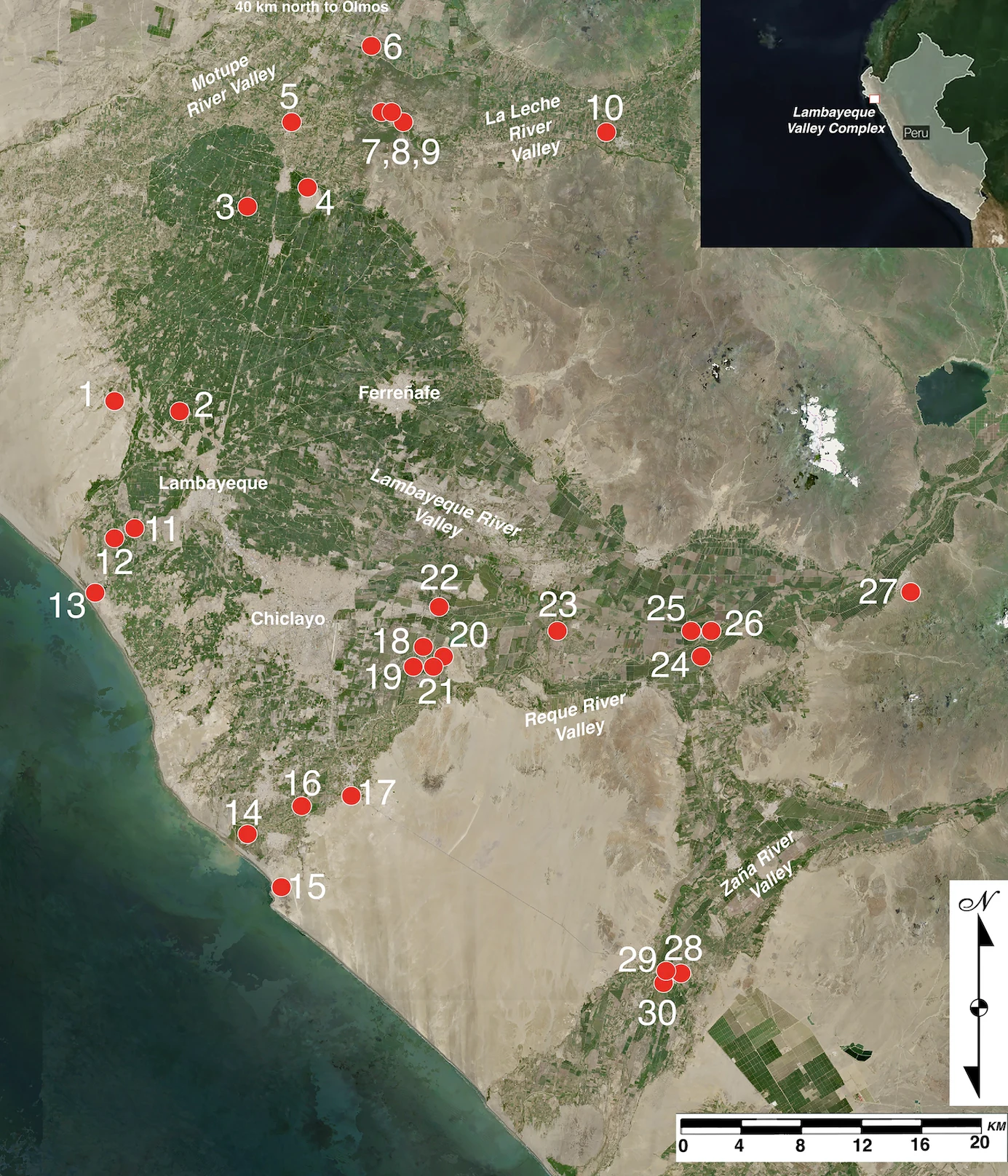
The team conducted a meta-analysis of the skeletal remains of 1,633 individuals that lived in Peru’s Lambayeque Valley over the course of 3,000 years before the arrival of Europeans. The remains presented “no strong evidence for an association between environmental factors and interpersonal violence” and suggested “that non-ritual violence in the Lambayeque Valley Complex was rare (1.6%),” according to the study.
The mass sacrifices reflect “the sometimes lethal relationships between human behavior, cultural norms, and the environment—and are frequently used as cautionary allegories regarding the ongoing climate crisis,” said authors Thomas Snyder of New York University and Haagen Klaus of George Mason University.
Time to add “prevention of ritualized human sacrifice” to the list of reasons to address climate change. Worth a shot?
Before Play-Doh, there was clay-doh
The fingerprints of children who lived 15,000 years ago in the southern Levant are preserved on clay artifacts, a discovery that exposes “a rare direct testimony of inter-generational knowledge transmission in a hands-on apprenticeship,” according to a new study.
Archaeologists studied 154 clay figurines that were unearthed across three archaeological sites in Israel, including a subset depicting birds, a gazelle, and two human forms. Crafted by the Natufian culture, these artifacts represent “the earliest evidence of a figurative clay tradition in Southwest Asia where it marks an important step in the evolution of human technology,” said researchers led by Laurent Davin of the Hebrew University of Jerusalem.
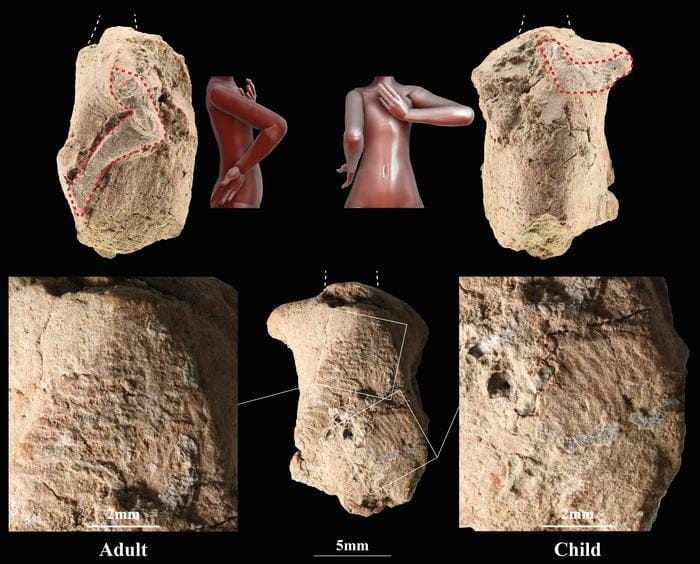
Because these people sculpted the artifacts by hand, fingerprints are occasionally spotted on the clay, revealing the contributions of children and adults. In some cases, a preserved “succession of gestures on the wet clay suggests that, during the modeling sequence, an adult passed on the figurine to a pre-pubescent child,” the team said. “Therefore, these artefacts could be interpreted as portable figurative mnemotechnic devices related to children’s learning of traditional beliefs and ethno-ornithological knowledge.”
It’s so evocative to see the preserved touch of a child who lived so long ago, capturing a moment of skill-building and, perhaps, play. While we don’t know exactly what these figurines meant to their crafters, their survival is a testament to human creativity and imagination.
The ants are Benjamin-Buttoning
We humans are used to a pretty standard life cycle: Birth, reproductive years, a decline in fertility, and an inevitable slide toward mortality. But a multi-decade study of ants reveals that some colonies operate as “superorganisms” that display increased reproduction and decreased mortality rate with age, reversing the course of normal senescence.
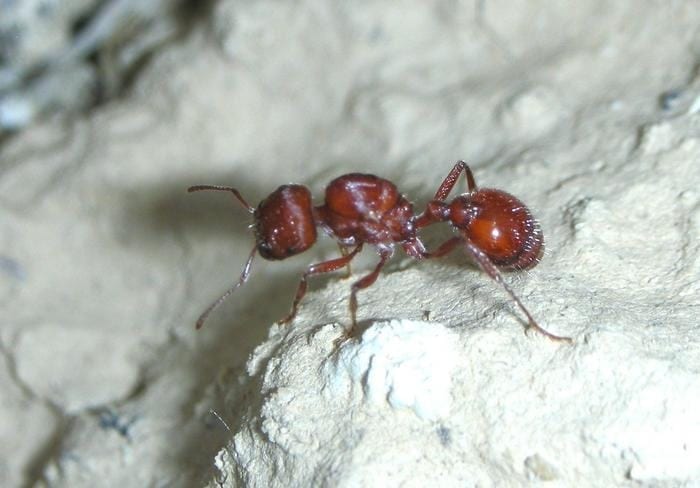
Researchers who gathered 34 years of data on 3,285 colonies of the western harvester ant (Pogonomyrmex occidentalis) discovered that these groups “display reverse aging,” according to their new study.
“We will show that colonies of P. occidentalis not only have extraordinary longevity, but that their pattern of aging differs dramatically from that of most insects,” said authors Blaine J. Cole and Diane C. Wiernasz of the University of Houston. “Colonies exhibit negative senescence—increased survival and reproduction with greater age.”
This finding does not mean that individual ants are aging in reverse; worker ants live and die normally in these colonies. However, the larger superorganism becomes an unusual “non-senescing form.” While the ants go marching one by one, the colony’s lifespan adds up to a larger sum.
Thanks for reading! See you next week.
Source: 404 Media · 404media.co