Skip to content
Live
  1. Google Research88

    Google Opens /teamwork Multi-Agent Workflow in Antigravity

    Google has opened the /teamwork multi-agent workflow in Antigravity to external researchers and developers, which can be used in conjunction with Gemini 4 Argon, Carbon, and Hydrogen; /boost and Deep Review are also available.

    Why it matters: Google has disclosed /teamwork's specific results in multi-agent research and engineering tasks and made it available for external researchers to use.


  1. Hugging Face Blog65

    llama.cpp and ggml release v1.0.0, establishing semantic versioning rules.

    llama.cpp and ggml release v1.0.0, binding destructive changes to the public C API to the major version number, and both will be released according to semantic versioning rules thereafter. The project has supported over 150 model architectures and mainstream speculative decoding methods, and provides pre-release binaries for Linux, macOS, Windows, Android, iOS, as well as distribution channels such as Docker, Homebrew, and conda-forge.

    Why it matters: llama.cpp and ggml are released simultaneously with v1.0.0, and the major version number corresponds to destructive changes to the C API, allowing downstream dependents to plan their upgrade schedule accordingly.

  2. vLLM Blog60

    vLLM supports Thinking Machines' Inkling 2 Small on its first day of release

    vLLM provides support for Inkling 2 Small on its first day of release. The model is a multimodal MoE with text and visual inputs, featuring a total of 594B parameters, 17B activation parameters, a maximum context length of 1M tokens, and comes with a built-in DSpark beam decoder.

    Why it matters: The original text provides details of vLLM's Day-0 support for Inkling 2 Small and multiple kernel optimizations, allowing readers to understand the deployment path and throughput performance of the model.

  3. Databricks Blog60

    Databricks introduces Lakehouse//RT, aimed at real-time analysis loads for agents.

    Databricks has released the Lakehouse//RT, designed to directly handle high-concurrency real-time queries brought by AI agents on lakehouses, currently in beta. The official claims it can provide latency below 100 milliseconds under 12,000 QPS, and through four paths—high concurrency, rapid execution, small-step scaling, and a single system—ensures that cost growth is slower than query volume growth.

    Why it matters: The original text provides four cost reduction mechanisms and migration data from three customers, allowing judgment on whether the real-time analytics layer is worth replacing.

  4. Google AI Blog82

    Google Search has integrated Gemini 4 Hydrogen and is now open to global users.

    Google Search has launched Gemini 4 Hydrogen, the largest model upgrade to date, now available to all global users. The company claims the new model can understand multi-part questions, spelling errors, and highly specific requests, and leverages stronger instruction following and tool calling capabilities to respond to each question individually. Hydrogen's reasoning ability also enhances query distribution, allowing it to retrieve multiple related subtopics simultaneously and provide more images, structured responses, comparison tables, and custom tools.

    Why it matters: Google's official statement on Gemini 4 Hydrogen explains changes in intent understanding, query distribution, and visual responses in search, which can be used to judge the direction of adjustments to the search experience.

  1. Google Developers Blog78

    Google releases generative UI open protocol A2UI 1.0

    Google has released the Generative UI Open Protocol A2UI 1.0, which is the first stable version of the protocol, allowing AI agents to respond with interactive interfaces instead of plain text. Version 1.0 adds bidirectional function calls, accessibility support, and extended metadata, and provides open-source rendering SDKs for Web, Android, iOS, as well as agent SDKs for Python, TypeScript, and Dart.

    Why it matters: A2UI 1.0 extends agent output from pure text to native interactive interfaces, providing multi-platform renderers and integration scheme examples, allowing for judgment on the implementation methods of generative UI.

  1. Databricks Blog76

    Databricks upgrades Genie One to an enterprise AI collaboration workspace

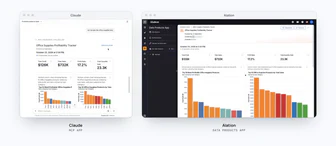
    Databricks announces Genie One as the unified entry point for enterprise AI collaboration, consolidating search, product generation, and cross-tool operations into one place, and providing enterprise context based on Genie Ontology, governed by Unity Gateway.

    Why it matters: The original text provides specific capabilities of Genie One from Q&A to product generation, cross-tool execution, and governance, allowing for judgment on how enterprise AI workbenches can be implemented.

  2. Databricks Blog66

    Databricks has announced that Genie Ontology is now officially available.

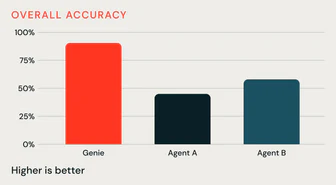
    Databricks announces the official availability of Genie Ontology, where agents continuously learn business context from dashboards, SQL queries, notebooks, and semantic models, and key definitions are managed by humans through Unity Catalog.

    Why it matters: The original text provides pass rates, time consumption, and token comparisons for benchmarks co-built with Turing, allowing judgment on the impact of the enterprise context layer on the accuracy of agents.

  3. Databricks Blog80

    Databricks releases new Genie: an autonomous AI colleague for complex enterprise work

    Databricks released a new version of Genie, positioning it as an autonomous AI colleague that can continuously track progress, follow up on missing inputs, and take action when new information arrives. Users can set guards and approve critical steps. The new version is paired with Genie Ontology, which provides business definitions and organizational knowledge. Genie Search uses a hybrid search combining indexing and MCP, and continues to use Unity Catalog permissions. Unity Gateway manages access, cost, and auditing uniformly.

    Why it matters: The original text outlines the boundary of Genie's ability to shift from an assistant to autonomously performing long-term tasks and its governance methods, which can be used to determine the context and permission controls needed for enterprise agents to go live.

  1. Google Developers Blog60

    Google AI Studio supports building Google Maps applications with prompt words

    Google AI Studio can now directly build applications driven by Google Maps Platform, where users describe their ideas and AI Studio automatically completes configuration and API key management without a credit card.

    Why it matters: The original text provides daily quotas without a credit card and a complete path from prompt words to a runnable map application, allowing readers to judge the cost of prototype construction based on this.

  1. NVIDIA Newsroom78

    NVIDIA released the GR00T 2 world action model and Isaac Lab 3.0 on CoRL.

    NVIDIA released the open-source world action model GR00T 2 on CoRL, built on NVIDIA Cosmos, trained with 100,000 hours of NVIDIA open-source first-person human data, and can complete 40 out of 50 evaluation tasks without task-specific demonstrations.

    Why it matters: The original text provides the success rate of GR00T 2 on few-shot tasks and the training throughput improvement of Isaac Lab 3.0, which can be used to judge the extent to which simulation training promotes robot deployment.

  2. Google Developers Blog65

    Google details Pathways: a single controller training system for large models.

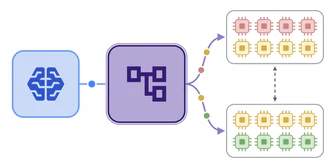
    Google announces Pathways is now generally available on Google Cloud Platform, which is Google's distributed system used to train its own large models like Gemini.

    Why it matters: Google engineers explain the single controller execution model of Pathways and provide a layered difference with Ray for judging the selection of large-scale training orchestration.

  1. Cursor Changelog60

    Cursor online with real-time voice calls to agents

    Cursor launches Voice Chat, allowing users to have real-time voice calls with agents, dictate modification requests, ask what the agent is doing, and receive progress updates.

    Why it matters: Officially, it explains which platforms the voice call is available on and how to divide tasks with coding agents, allowing readers to judge which collaboration scenarios it suits.

  2. LangChain Blog72

    LangChain introduces asynchronous sub-agents for Deep Agents

    LangChain introduces asynchronous sub-agents in Deep Agents, where a resident orchestrating agent interfaces with users, and the sub-agents execute long tasks in the background in parallel and report results upon completion.

    Why it matters: The original text provides five management tools and notification mechanisms for asynchronous sub-agents, which can be used to determine how to set up the workflow for parallel long tasks.

  1. Cursor Changelog78

    Cursor goes live with Live Apps, allowing building and sharing accessible applications within the editor

    Cursor introduces the Live Apps feature, where users describe their needs, and the cloud-based intelligence builds a web application, starts a Postgres database on demand, integrates with Cursor SSO authentication, and completes hosted deployment, generating a shareable link after publication.

    Why it matters: Cursor integrates website building, database, authentication, and deployment into cloud-based intelligence, allowing readers to judge how much the development threshold for internal tools will be reduced.

  2. Claude app release notes67

    Claude adds security and management controls for Enterprise plan and launches Personal Finance beta

    Claude Enterprise adds security center, reasoning hooks, centralized management, and more access control features, with several in beta stage. Claude also launches Personal Finance beta, which can link bank, credit card, loan, and investment accounts, view balances and expenses on one page, and ask Claude questions. Aimed at Pro, Max, and Ultra plans, available only in the US.

    Why it matters: Official explanation lists new security and management capabilities for the Enterprise version, and provides the open scope and available packages for Personal Finance beta.

  3. Mistral AI75

    Mistral releases Mistral Large 4 (Le Chonk) and expands Mistral Studio platform

    Mistral releases Mistral Large 4 (codename Le Chonk), featuring coding, defensive cybersecurity, and complex document reasoning, while expanding the enterprise platform Mistral Studio with new capabilities for hosted agents, applications, workflows, as well as enterprise context, agent observability, and evaluation features.

    Why it matters: The original text provides three types of capabilities (hosted agents, workflows, applications) and deployment options, allowing readers to judge the implementation methods of enterprise agents accordingly.

  1. vLLM Blog71

    Buoyant Open Sources Kinference: An Inference Control Plane for vLLM and Kubernetes

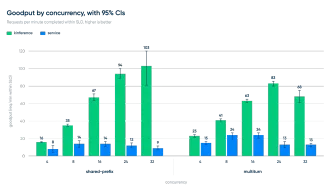
    Buoyant releases open-source project Kinference, as an inference control plane for vLLM and Kubernetes, providing token rate limiting, tenant usage and cost tracking, KV cache-aware load balancing, and inference strategies.

    Why it matters: The original text provides benchmark comparisons and YAML strategy examples for KV cache-aware load balancing, which can be used to judge how to design the routing layer of the reasoning platform.

  2. Databricks Blog60

    Apache Spark 4.3 was released, and Databricks Runtime 19 is now available.

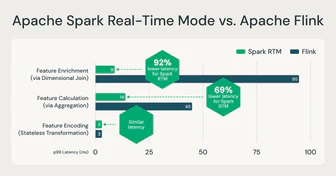
    Apache Spark 4.3 was released and is available in Databricks Runtime 19, with the Real-Time Mode now adding stateful processing, supporting streaming aggregation, dropDuplicates, and transformWithState.

    Why it matters: The original text provides three benchmark latency data for real-time stateful processing and the changes in the quarterly release rhythm, allowing readers to judge the trade-offs of the stream processing architecture.