Skip to content
Live
  1. Hugging Face Blog71

    IBM releases LLMON markup language and Granite 4.1 3B/8B preview models

    IBM released LLMON (LLM Object Notation) markup language on Hugging Face and launched two experimental preview models based on Granite 4.1: granite-4.1-3b-LLMON-preview and granite-4.1-8b-LLMON-preview, while also open-sourcing a GitHub toolkit.

    Why it matters: The original text provides the design motivation for the LLMON markup language and the two preview models, allowing readers to understand how separating instructions and data can reduce the risk of indirect prompt injection.


  2. Google DeepMind87

    Google DeepMind releases Gemini 4 Hydrogen model

    Google DeepMind releases Gemini 4 Hydrogen, targeting daily coding and intelligent agent workflows, with an Artificial Analysis intelligence index of 51 at the default high thinking level, higher than Argon's 50, and reaching 54 at the xhigh level

    Why it matters: Google provides the division of labor and positioning of Hydrogen, Carbon, and Argon, as well as the actual differences in cost and speed between multi-model arrangements.

  1. Google DeepMind66

    DeepMind releases AlphaGenome 2, predicting DNA variation impacts by cell type

    Google DeepMind releases AlphaGenome 2, a conditional DNA sequence model that can predict the impact of DNA mutations on gene expression for specific cell types or states.

    Why it matters: Officially disclosed the conditional architecture modification and single-cell level evaluation comparison, which can understand how the model localizes the effect of mutation to specific cell types.

  1. MiniMax News80

    MiniMax releases open-source image generation model H3-Image

    MiniMax has released an open-source weight image generation model based on H3, H3-Image, which supports text-to-image, reference image generation, and image editing, capable of generating 4096 × 4096 4K images within 10 seconds, and supports up to 16 reference images.

    Why it matters: The official provides 4K generation speed, reference image quantity, and pricing range, which can be used to judge the gap between open-source image models and closed-source solutions.

  2. Google DeepMind76

    Google DeepMind releases Gemini Robotics 2.5 vision-language-action model

    Google DeepMind released Gemini Robotics 2.5, claiming it is the most capable vision-language-action (VLA) model to date, with a 30% to 100% increase in success rate on 200 tasks compared to previous baselines, and 20% to 30% faster task completion speed.

    Why it matters: Officially disclosed were 200 task evaluations and actual production line test data showing a 96% success rate for Mercedes-Benz, which can be used to judge the extent of VLA model deployment in real industrial scenarios.

  3. Claude · YouTube68

    Claude Mythos 5.2 predicted the complete AAV coat structure

    Claude Mythos 5.2 predicts the complete AAV capsid structure, which is composed of 60 identical protein chains. It writes code for an open-source folding model to handle the overlap grouping of adjacent five chains, then uses the symmetry of the capsid to assemble the 60 chains. On AAV2, its prediction deviates from the experimental structure by about the width of an atom.

    Why it matters: The original text provides specific methods and accuracy of the model in real scientific research tasks, allowing readers to judge its applicable boundary in structural prediction work.

  4. Claude · YouTube75

    Anthropic released Claude Fable 5.2

    Anthropic releases Claude Fable 5.2, designed for the most challenging technical challenges, with improvements in coding, reasoning, and vision, suitable for the most ambitious open-ended technical work. The official recommendation is to use Opus 5.5 for most coding and knowledge tasks, and Fable 5.2 is now available in the Pro, Max, Team, and Enterprise packages.

    Same story · 3 outlets

    How the accounts differ:TechCrunch states the input price of Fable is reduced to $8 per million tokens; others do not mention the price.

    Why it matters: The official statement explains the positioning and applicable scenarios of Fable 5.2, and provides a choice suggestion between Opus 5.5, making it easier to decide which model to use.

  1. Hugging Face Blog71

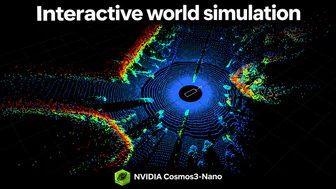
    NVIDIA has released four open-source world model checkpoints for Cosmos 3.

    NVIDIA has added four new open-source weight checkpoints for Cosmos 3 under the Cosmos World Model platform, all of which are post-trained versions of Cosmos 3 Nano, containing 16B trainable parameters, using the OpenMDW1.1 license, allowing commercial and non-commercial use.

    Why it matters: The original text provides four open-source weight checkpoints and a four-stage training recipe, allowing readers to judge how to adapt the world model to their own sensors and robot bodies.

  2. OpenAI News75

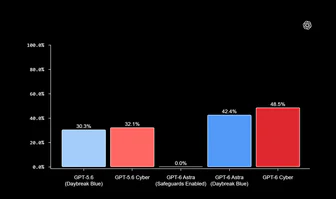
    OpenAI releases GPT-6 Cyber security model

    OpenAI releases GPT-6 Cyber, a security model for discovering exploitable vulnerabilities and developing solutions, trained to keep its behavior within authorized limits.

    Why it matters: OpenAI releases a dedicated model for vulnerability discovery and remediation, emphasizing authorized scope constraints, observable boundaries of security agent capabilities.

  3. Google DeepMind78

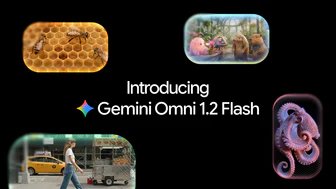
    Google DeepMind has released Gemini Omni 1.2 Flash, supporting 15-second videos and reducing the price by 30%.

    Google DeepMind has released Gemini Omni 1.2 Flash, increasing the native video generation duration from 10 seconds in Omni 1.1 to 15 seconds, and it has been fully opened in the Gemini API and Gemini for business.

    Why it matters: The original text lists specific changes in duration, price, and reference consistency, allowing readers to judge how the cost and workflow of video generation will change.

  1. Hugging Face Blog72

    Phonon TTS releases on-device speech models, topping multiple metrics on the Hugging Face open TTS leaderboard

    Phonon releases a small TTS model that can run on local devices, without a server and network, offering two versions of about 65 MB and 75 MB, covering English, French, German, Spanish, and Portuguese.

    Why it matters: The original text outlines the specifications, open-source license, and leaderboard performance of on-device TTS models, allowing judgment on the usability boundary of small models in local voice scenarios.

  2. OpenAI News62

    OpenAI launches Images 2.6, enabling faster image generation and GIF creation support

    OpenAI has released Images 2.6, bringing faster image generation, GIF creation, more precise editing, and new API controls. This version covers three access points: ChatGPT, Codex, and API.

    Why it matters: The original text lists four changes: image generation speed improvement, GIF creation, more precise editing, and API control, which can be used to judge the boundary of image capabilities for ChatGPT, Codex, and API.

  3. Hugging Face Blog65

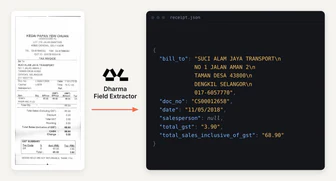
    Dharma-AI releases Dharma Field Extractor: 2B parameter model extracts any document into JSON fields

    Dharma-AI releases Dharma Field Extractor, a 2B parameter model, input document image and optional schema, output typed structured JSON, supports open extraction and schema-directed extraction, missing fields return null.

    Why it matters: The original text provides a comparison of quality and cost on self-built benchmarks, allowing readers to judge the feasibility of the small model specialized route in field extraction tasks.

  1. Hugging Face Blog85

    Mistral Large 4 (Le Chonk) released on Hugging Face

    Mistral releases multimodal MoE model Mistral Large 4 (Le Chonk), with approximately 1T total parameters, 49B activation parameters, a context window of 1M tokens, offering two official versions FP8 and NVFP4, as well as GGUF made by Unsloth and llama.cpp teams.

    Why it matters: The original text provides specific scores for the 1T total parameter, 49B activation multimodal MoE model on cybersecurity and coding benchmarks, along with measured throughput for local and endpoint deployment.

  2. Mistral AI82

    Mistral releases open-source model Mistral Large 4 (Le Chonk) with trillion parameters

    Mistral releases open-weight version of its flagship trillion-parameter native multimodal model Mistral Large 4 (Le Chonk), which has been in public preview for three weeks.

    Why it matters: The official provides data on the encoding, security, and inference efficiency of the trillion-parameter open-source model, as well as weight downloads and self-hosting paths.

  3. Google DeepMind87

    Google DeepMind releases the Gemini 4 Carbon cutting-edge model

    Google DeepMind has opened Gemini 4 Carbon to developers, enterprises, scientists, and consumers, claiming it has reached cutting-edge levels in network security capabilities and long-range intelligent agent workflows.

    Why it matters: The official provides the positioning division of roles between Carbon and Argon, multiple benchmark rankings, and cost comparisons per task to help determine when to use a heavier model.

  1. Hugging Face Blog78

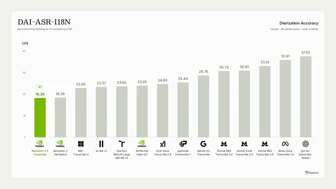
    NVIDIA has released Nemotron 3.5 Transcribe and the Granary v2 data pipeline.

    NVIDIA has released the open-source weight model Nemotron 3.5 Transcribe, integrating transcription, speaker separation, translation, and audio Q&A into a single checkpoint, supporting transcription in 40 languages, translation between 31 languages and English, and speaker annotation in 13 languages, capable of processing the longest 1-hour recordings and annotating up to 8 speakers.

    Why it matters: The original text provides a unified weighting model for multilingual transcription, speaker separation, and translation, along with an open data pipeline and fine-tuning recipes, which can be used to determine the adaptation path for voice scenarios.

  2. Hugging Face Blog76

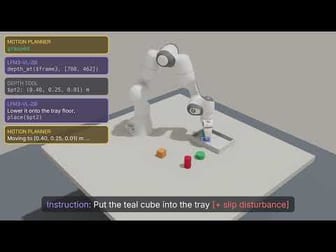
    Liquid AI releases LFM3 series: Same 2B backbone derived text, visual, audio, multimodal and decision models

    Liquid AI releases the new generation Liquid Foundation Models, LFM3, deriving six 2B-level models from the shared backbone LFM3-1.7B-Base, covering text, vision, audio, multimodal, and decision, all open weights on Hugging Face.

    Why it matters: Liquid AI derives six modality models from the same 2B-level backbone and provides single-card fine-tuning and edge deployment paths, which can be used to judge the specialization route for small models.

  3. Google DeepMind84

    Google DeepMind releases world model Genie 4

    Google DeepMind releases world model Genie 4, which can generate interactive simulated worlds with native audio in real-time, and change weather, camera angles, and scene elements in real-time with text prompts. Genie 4 natively generates environmental sounds and voice conversations for the first time, with characters able to converse in real-time and respond to scene events; Gemini 3.8 Flash acts as a guiding intelligence in the loop, breaking down goals into steps and verifying frame by frame.

    Why it matters: The official disclosure of three capabilities—native audio, real-time text control, and Gemini-guided reasoning—can be used to judge the position of the world model in robotics and content preview.

  1. Microsoft AI News67

    Microsoft released the MAI Image 2.7 image editing model, ranking 3rd on Arena Edit and 2nd on Artificial Analysis.

    Microsoft AI released the image editing model MAI Image 2.7, launching as a preview version. It ranks 3rd in Arena Edit and 2nd in the Artificial Analysis image editing chart, making Microsoft AI the 2nd place lab.

    Why it matters: Microsoft announced the rankings of MAI Image 2.7 on two image editing lists and provided the improvement magnitude on 10 use cases compared to the previous generation.