Skip to content
Live
  1. Databricks Blog60

    Databricks introduces Lakehouse//RT, aimed at real-time analysis loads for agents.

    Databricks has released the Lakehouse//RT, designed to directly handle high-concurrency real-time queries brought by AI agents on lakehouses, currently in beta. The official claims it can provide latency below 100 milliseconds under 12,000 QPS, and through four paths—high concurrency, rapid execution, small-step scaling, and a single system—ensures that cost growth is slower than query volume growth.

    Why it matters: The original text provides four cost reduction mechanisms and migration data from three customers, allowing judgment on whether the real-time analytics layer is worth replacing.


  1. Databricks Blog66

    Databricks has announced that Genie Ontology is now officially available.

    Databricks announces the official availability of Genie Ontology, where agents continuously learn business context from dashboards, SQL queries, notebooks, and semantic models, and key definitions are managed by humans through Unity Catalog.

    Why it matters: The original text provides pass rates, time consumption, and token comparisons for benchmarks co-built with Turing, allowing judgment on the impact of the enterprise context layer on the accuracy of agents.

  2. Google DeepMind66

    DeepMind releases AlphaGenome 2, predicting DNA variation impacts by cell type

    Google DeepMind releases AlphaGenome 2, a conditional DNA sequence model that can predict the impact of DNA mutations on gene expression for specific cell types or states.

    Why it matters: Officially disclosed the conditional architecture modification and single-cell level evaluation comparison, which can understand how the model localizes the effect of mutation to specific cell types.

  1. Claude · YouTube68

    Claude Mythos 5.2 predicted the complete AAV coat structure

    Claude Mythos 5.2 predicts the complete AAV capsid structure, which is composed of 60 identical protein chains. It writes code for an open-source folding model to handle the overlap grouping of adjacent five chains, then uses the symmetry of the capsid to assemble the 60 chains. On AAV2, its prediction deviates from the experimental structure by about the width of an atom.

    Why it matters: The original text provides specific methods and accuracy of the model in real scientific research tasks, allowing readers to judge its applicable boundary in structural prediction work.

  1. Anthropic Research62

    Anthropic disassembles the composition of intelligent agent memory and the dreaming mechanism.

    Anthropic has published a research paper, breaking down Claude's intelligent agent memory into components such as memory notes, offline dreaming organization, and memory hierarchy improvement, and explaining that memory refers to context that is preserved across sessions and can be read again, excluding weight updates, context learning within a single session, and compaction.

    Why it matters: Anthropic has disclosed the hierarchical design of agent memory and the dreaming mechanism, providing comparable experimental results using CL-Bench, Pokemon, and internal document corpora.

  1. vLLM Blog72

    REINFORCE Zero: Aligned kernel allows asynchronous RL to train stably under lag 64.

    NVIDIA Research and Inferact's REINFORCE Zero proposes to first align rollout with training kernel, then use unclipped token-level importance sampling to correct weight lag, achieving a training step throughput 2.40 times that of synchronous training under 16 GPUs and 12K updates.

    Why it matters: The paper breaks down the gap between asynchronous RL's rollout and training into two items: weight lag and kernel inconsistency, and proposes an alignment-free, no-trimming importance sampling method after alignment.

  2. Google Research72

    Google Research uses smartwatch sensors to identify signs of hypertension.

    Google Research published a multimodal AI system AI-PPG-ACC-HTN in Nature, which passively identifies hypertension status without wristband calibration, using only PPG and accelerometer data from consumer-grade smartwatches.

    Why it matters: The study passively identifies hypertension using PPG and accelerometer data from smartwatches, providing quantitative results for screening and confirmation in two stages, with 24-hour dynamic blood pressure monitoring as the gold standard.

  1. Hugging Face Blog65

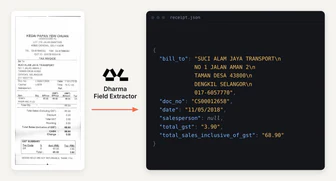
    Dharma-AI releases Dharma Field Extractor: 2B parameter model extracts any document into JSON fields

    Dharma-AI releases Dharma Field Extractor, a 2B parameter model, input document image and optional schema, output typed structured JSON, supports open extraction and schema-directed extraction, missing fields return null.

    Why it matters: The original text provides a comparison of quality and cost on self-built benchmarks, allowing readers to judge the feasibility of the small model specialized route in field extraction tasks.

  1. vLLM Blog62

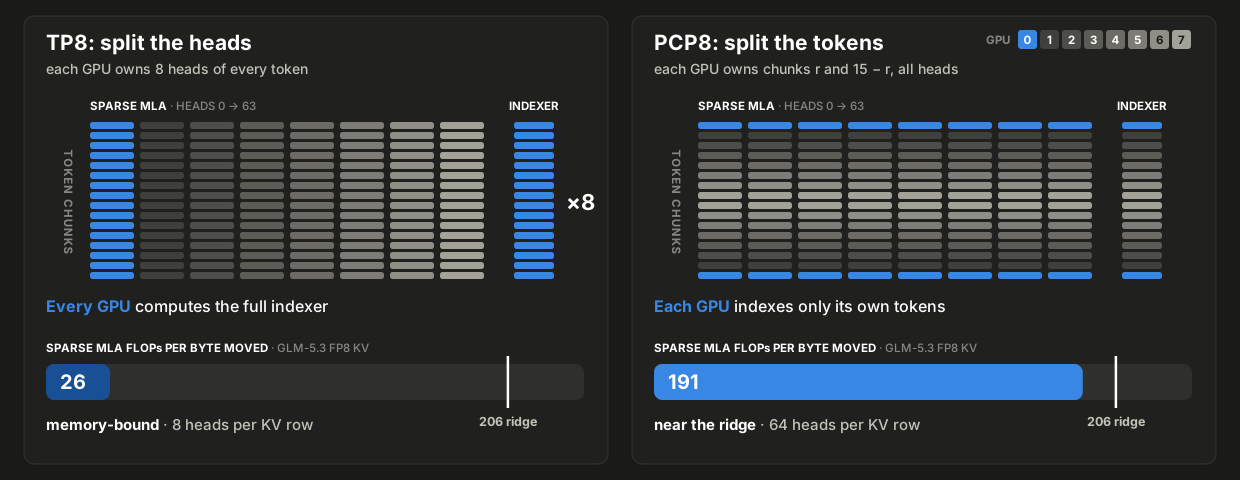
    vLLM provides an in-depth explanation of the optimization of PCP, DCP, and Hybrid HiSparse for GLM-5.3 on 16 H200s

    vLLM team releases the second part of GLM-5.3 optimization, deploying on 16 H200s with 1 pre-filled node and 1 decoding node, using PCP to split pre-fill by token and DCP to split KV cache by token, allowing 1M context to fit into the pre-fill node

    Why it matters: The vLLM team has dissected how PCP, DCP, and Hybrid HiSparse can be combined on 16 H200s, allowing readers to understand the memory and pre-fetch bottlenecks of long-context deployment.

  1. Hugging Face Blog66

    Microsoft and Hugging Face use ThinkingBox database validation for RL reward training agents

    Microsoft and Hugging Face release ThinkingBox-Training, directly using ThinkingBox's deterministic verification of database final states as reinforcement learning rewards, training Qwen3.8-27B for 50 steps with GRPO

    Why it matters: Microsoft and Hugging Face directly use database final state verification as reinforcement learning rewards and have publicly released task filtering and training code, which can be transferred to other stateful intelligent agent training

  2. Databricks Blog60

    Databricks Talks AI Billing: How to Reduce the Unit Cost of Coding Agents by 90%

    Databricks executive Patrick reviews the process where the cost of AI coding agents increased exponentially after the company fully adopted them, and then reduced the unit cost by up to 90% by controlling the layer. He mentions that shifting traffic to cheaper new models contributed to more than 50% of the reduction, and Smart Router reduced the average task cost by more than 30% while maintaining near the quality of the most expensive model. This internal solution was later productized as Unity Gateway, which is now used by thousands of customers.

    Why it matters: Databricks executive reviews the process of its own AI coding costs from out of control to reducing the unit cost by 90%, providing migratable practices for gateways, routing, and self-built evaluations.

  1. Hugging Face Blog78

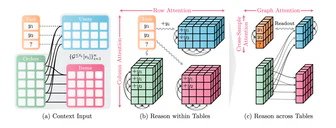
    NVIDIA releases Kumo Relational relational foundation model, capable of prediction without training

    NVIDIA releases pre-trained relational foundation model Kumo Relational, enabling direct prediction on enterprise databases without task-specific training, feature engineering, or table flattening. The model outperforms supervised relational deep learning and expert feature engineering gradient boosting trees on 41 tasks across 15 databases, achieving an MRR 8% higher than AutoGluon ensemble on the SAP SALT benchmark.

    Why it matters: The original provides a comparison result of pre-trained relation models on 41 tasks and an open-source entry, allowing readers to judge whether it can replace the existing XGBoost pipeline.

  1. Anthropic Research71

    Anthropic Research: What Work Can Robots Currently Complete?

    Anthropic has released a Robot Exposure Index study, using Claude to evaluate about 19,000 tasks in O*NET, finding that existing robots can complete 74% of physical tasks in the U.S. and account for 34% of all work time, but most are limited to controlled environments.

    Why it matters: Anthropic used Claude to rate O*NET tasks item by item, quantifying how much work robots can currently cover, and provided constraints on cost and regulation.

  1. Anthropic Research80

    Claude autonomously discovers a new enzyme system with CRISPR-like repetitive sequences.

    Anthropic has established a life science research team and built its own laboratory, allowing the Claude intelligent entity to autonomously search in DNA sequence databases and discover a new enzyme system ART (array-associated reverse transcriptases) related to DNA repetitive sequences.

    Why it matters: Anthropic's self-built lab enables Claude to autonomously screen DNA databases and discover a new enzyme system similar to CRISPR, demonstrating the specific process of AI-driven hypothesis generation.

  1. Anthropic Research78

    How does Claude accelerate protein design and analysis chemistry?

    Anthropic announced two experimental results: Claude (Mythos Preview and Opus 4.8) designed protein binders for 15 targets, successfully covering 14, with a hit rate of 35.1% in single-target mode, higher than the common 10-15% in current protein design activities.

    Why it matters: Anthropic announced Claude's experimental results in protein design and analysis chemistry, providing wet lab validation data and prompts.

You are all caught up