Skip to content
Live
  1. Newcomer82

    NVIDIA's Huang Renxun Resigns, Anthropic IPO and Computing Power Demand Become Focal Points of CVAI Summit

    At the Cerebral Valley AI Summit in San Francisco, AI founders and investors discussed Huang Renxun's resignation from NVIDIA, Anthropic's upcoming IPO, and the continuously rising demand for computing power.

    Why it matters: The article places Huang Renxun's resignation, Anthropic's IPO, and computing power demand at the same conference, showcasing the industry's immediate response to NVIDIA's changes.

  1. Latent Space88

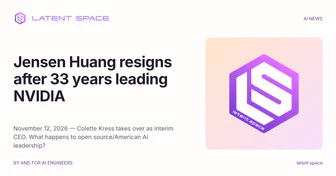
    Huang Renxun Resigns as NVIDIA CEO, Colette Kress Takes Over as Interim CEO

    NVIDIA announced that Huang Renxun resigned from his positions as CEO, President, and Board Member after 33 years in charge, SEC filings show the board accepted the resignation on November 11, and the company announced it on November 12; Colette Kress, who has been CFO since 2013, retains her position and takes over as interim CEO, Harvey Jones becomes the first chairman of the board, and the board has launched a search for a successor.

    Why it matters: NVIDIA's board accepted Huang Renxun's resignation and the CFO temporarily took over, while Anthropic submitted its IPO registration documents, two personnel and capital actions occurred on the same day.

  1. The Decoder85

    Anthropic IPO Secures Sixfold Over-subscription, Expected to Become the Largest Public Offering in History

    According to Bloomberg, Anthropic's IPO order volume reached six times the number of shares available for sale. The company and its co-founders plan to raise up to 644 billion USD through the public offering, and an additional 260 billion USD through private placement, aiming for a valuation of around 1.4 trillion USD.

    Why it matters: The original text provides the over-subscription multiple, funding size, and valuation of Anthropic's IPO, allowing readers to judge the scale of this round of listing in the capital market.

  1. The Decoder80

    Corporate sales drive OpenAI's third-quarter revenue to $10 billion, still lagging behind Anthropic

    According to reports from The Wall Street Journal and The Information, OpenAI's revenue grew by about 50% quarter-on-quarter to $10 billion, while adjusted operating losses increased slightly from $10.1 billion to $10.9 billion.

    Why it matters: Comparing the revenue and loss structure of the two companies in the same quarter can reveal the efficiency difference between the enterprise customer and consumer business routes.

  1. TechCrunch · AI71

    Ramp data shows AI spending stagnation, as Anthropic's IPO is approaching.

    Ramp's report shows that corporate token spending only increased by 1.5% from August to September, while it grew by 42% month-on-month in July, and token usage is still rising. Ara Kharazian, chief economist at Ramp, believes that the price cuts by OpenAI and Anthropic and corporate discounts make AI usage cheaper, and the top 1% of spending companies are slightly below the monthly per capita peak of $10,000 in summer. Ramp data shows AI spending stagnation, coinciding with Anthropic's upcoming IPO. Ramp's spending data gives a price signal opposite to usage growth, which can be used to observe the tension between model companies' revenue and IPO valuations.

    Why it matters: Ramp's spending data provides a price signal opposite to usage growth, which can be used to observe the tension between model companies' revenue and IPO valuations.

  1. The Verge · AI80

    AI industry in the US faces regulatory and data center construction resistance after the midterm elections

    After the Democratic Party won both the Senate and House in the US midterm elections, the AI industry is facing the prospect of tighter regulation and slower data center construction, with 43 out of 44 local data center bans passed in the vote. Elected officials have promised to summon CEOs of AI companies to testify, and experts believe that Trump and the Republican Party in Congress have basically ended their efforts to ban state-level AI restrictions.

    Why it matters: The midterm election results and the vote on local data center bans provide specific signals for observing the direction of US AI regulation.

  1. 36Kr · AI88

    OpenAI automated vulnerability chain discovery identified 1724 Linux kernel vulnerabilities

    OpenAI's automated vulnerability research chain identified 2308 candidate samples of Linux kernel vulnerabilities, dynamically reproduced 1724 vulnerabilities, and generated 948 local privilege escalation (LPE) exploits.

    Why it matters: OpenAI disclosed a five-stage process and cost-benefit comparison of its automated vulnerability research pipeline, which can help understand the actual output of agents in security research.

  2. OpenAI News67

    OpenAI's own pipeline discovered and patched 948 local privilege escalation vulnerabilities in the Linux kernel

    OpenAI has built an autonomous pipeline to find, verify, and generate patches for 948 local privilege escalation vulnerabilities in the Linux kernel. The material only provides this result, not disclosing the specific methods of the pipeline, vulnerability details, or patch implementation status.

    Why it matters: OpenAI uses an autonomous pipeline to locate and verify 948 local privilege escalation vulnerabilities in the Linux kernel, observable level of automation in the security research process.

  1. 36Kr · AI72

    After the decision model became popular, why does the physical world need fast on-device judgment?

    TypeSafeAI released decision model Jev in mid-September, which only outputs yes/no, scores, or probabilities, and within weeks of launch, user numbers broke a million, with about one-third of Fortune 500 companies starting to use it, and its valuation increased from about $200 million to $7.5 billion in 24 days.

    Why it matters: From the explosion in popularity of decision models to on-device judgment in the physical world, it shows an industrial change in AI capabilities shifting from generation to measurable decision-making.

  2. OpenAI News60

    OpenAI announced the acquisition of Pierre Computer Company.

    OpenAI announced its acquisition of Pierre Computer Company to expand the tool capabilities of Codex in code construction, understanding, and review. The original text did not disclose the transaction amount, timeline, or specific arrangements for the team and products after the acquisition.

    Same story · 2 outlets

    How the accounts differ:36Kr states the deal targets Microsoft GitHub's code hosting business; OpenAI News and The Decoder do not mention this specific target.

    Why it matters: Official disclosure of the acquisition move, readers can understand Codex's reinforcement direction in code construction and review tools.

  3. The Decoder74

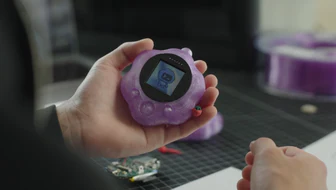
    OpenAI claims GPT-6 Astra designed a hardware device from scratch in less than a week.

    OpenAI states its hardware team used GPT-6 Astra to design a device that can communicate with Codex encoding agents as a side project, completed in less than a week. Astra handled all aspects including casing design, PCB layout with component selection and routing, firmware, and user interface. Contract manufacturers produced small batches of prototypes in less than a month, but due to Astra not always considering manufacturing constraints, tolerances, and assembly details, several rounds of modifications were required.

    Why it matters: OpenAI reveals the end-to-end hardware design process for GPT-6 Astra, also pointing out its shortcomings in manufacturing constraints.

  1. Simon Willison74

    Parameter Labs disclosed a chain of vulnerabilities for taking over ChatGPT accounts.

    Parameter Labs disclosed a chain of vulnerabilities targeting the ChatGPT HTML preview (original Canvas) sandbox mechanism, allowing attackers to steal private data of logged-in users or perform actions on their behalf.

    Why it matters: This vulnerability chain demonstrates how sandbox iframe, postMessage, and CSP whitelist can be bypassed layer by layer, helping to understand the security boundaries of HTML preview-like features.